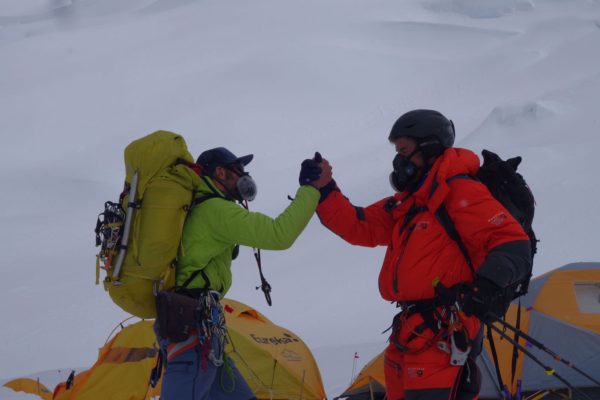
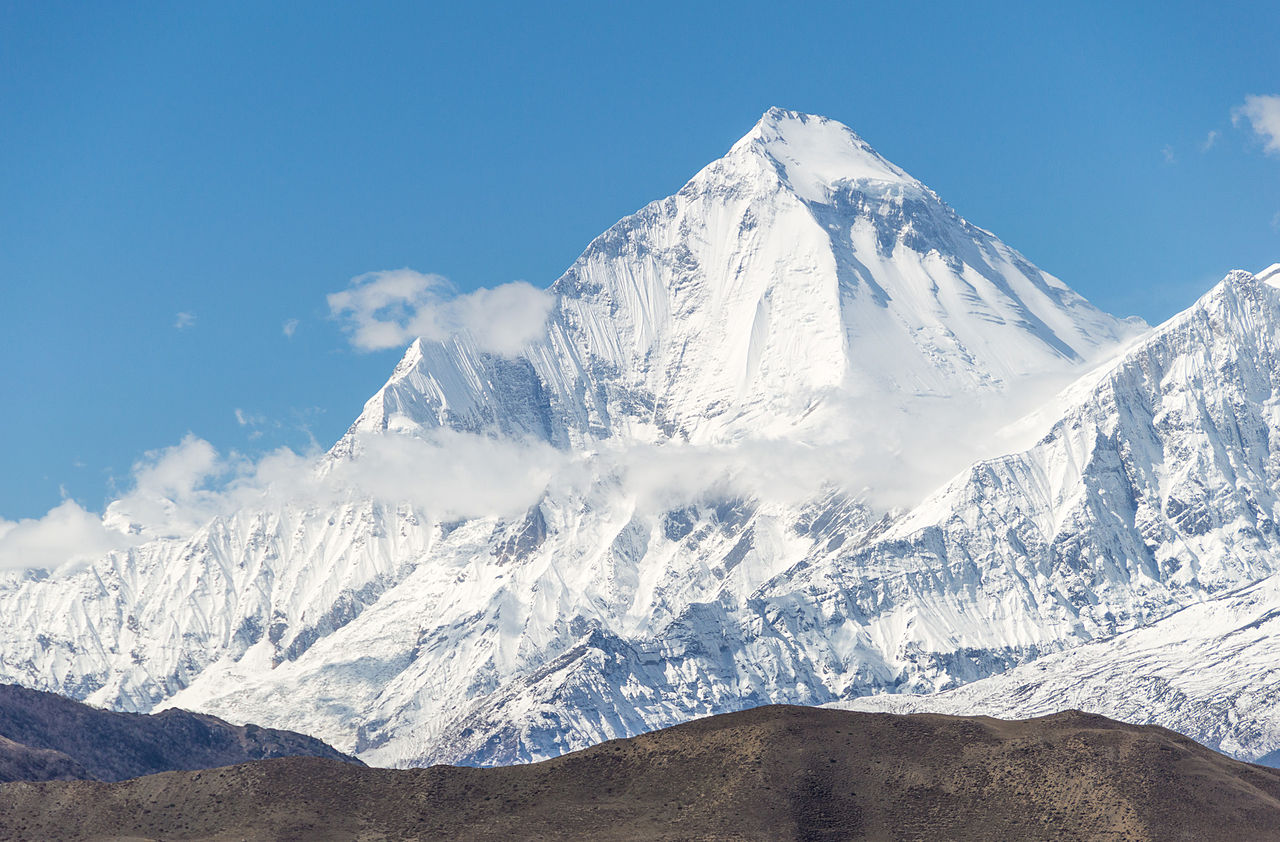
While most of the big commercial teams are now winding down their expeditions for the autumn in the Himalaya, there are still some very interesting climbs to that are still ongoing. Not the least of these is Nobukazu Kuriki's attempt at a solo – without oxygen no less – along the North Side of Everest. Yesterday, we received word that the Japanese alpinist has now set off on his attempt at the summit, a place that has eluded him on five separate occasions in the past.
According to Kuriki's support team, he will climb along the Hornbein Couloir route in his attempt to reach the summit. There is some speculation that he will make that approach along what is known as the Supercouloir Route, which is a combination of a route opened by a Japanese team back in 1980 and the Hornbein. If all goes according to plan, he should potentially top out sometime in the next couple of days.
Kuriki himself has been updating his Facebook page with updates as he goes. His most recent post indicates that he has reached his high camp and will set off for the summit possibly late Friday or early Saturday morning local Nepali time. Weather conditions are reportedly quite good, and while there has been a lot of snow deposited along the route, Nobu appears to be making good time on his way up.
If you are familiar with Kuriki's previous attempts on Everest, you probably already know what a successful summit would mean to him. As already mentioned, he has made five previous attempts at a solo summit on the mountain, one of which ended in disaster. In 2012, the Japanese climber became stranded high on the South Side in Nepal, and had to be helped down by a rescue team. While he was stuck at altitude, he suffered severe frostbite to his fingers and toes. He ended up having nine of his fingers amputated, and yet he continues to return to the mountain on a regular basis to test his strength and determination. Hopefully this time his efforts will pay off. Hopefully he'll also get up and down safely.
Over on Dhaulagiri we're still waiting on word from the Altitude Junkies about their plans. The team has hoped to summit that mountain this past weekend, but turned back after finding unexpectedly deep snow at Camp 2. They had returned to Base Camp, where they were pondering their next move, but since that time there has been now word on their decision. It is possible they are waiting out the weather and hoping to launch another summit attempt in the next few days, but they could also be preparing to clean up BC and head home. For now, we'll just have to wait to see what happens.
That's it for today. I'll be keeping a close eye on Kuriki's progress and will post updates as we hear more.
Tampilkan postingan dengan label Himalaya. Tampilkan semua postingan
Kamis, 06 Oktober 2016
Rabu, 05 Oktober 2016
Video: Climbing the South Face of Annapurna
In terms of pure altitude, Annapurna ranks 10th amongst the 8000 meter peaks, topping out at 8091 meters (26,545 ft). But when it comes to level of difficulty to climb, it ranks second to perhaps only K2. In fact, it is considered the most dangerous mountain on the planet by many thanks to its frequent avalanches and technical challenges, and yet it continues to hold an allure over many climbers who travel to its flanks each spring to have a go at the summit.
This video a short documentary about such a climb. In it, we join famed Swiss mountaineer Jean Troillet as he attempts Annapurna back in 2012. The clips gives us some impressive shots of the mountain, and provides plenty of insights into what it takes to take on such a difficult and dangerous climb. If you're a fan of Himalayan expeditions to the big peaks, you'll definitely want to watch this short-film, which takes us along on one of the toughest climbs of all.
Adventure Blog Interview: Jeff Evans of Travel Channel's Everest Air
![]() |
| Jeff Evans inside a rescue helicopter at Everest Base Camp |
For two months during the 2016 climbing season, a dedicated and experienced team of Sherpas and helicopter pilots, led by experienced mountaineer and medic Jeff Evans, went to great lengths to rescue climbers, guides, and local Nepalis living in the Khumbu Valley alike. "Everest Air" will give us a glimpse of what those operations were like, and how Jeff and his squad impacted the lives of those they helped.
Recently, I had a chance to chat with Jeff to get his thoughts on the show, the Everest climbing seven, what it was like conducting high altitude medical operations, and a lot more. It was clear from our conversation that this wasn't just a television gig for him, but a chance to give back to both the mountaineering community and the Nepali people.
An adventurer and outdoor athlete, Jeff grew up in the Blue Ridge Mountains of North Carolina, where a love of the outdoors was instilled at a very young age. As he grew older, he immigrated west to Colorado where he attended college at UC Boulder where he studied medicine as he worked towards becoming a physician's assistant. While there he also continued to hone his climbing skills, which would later take him up some of the more famous routes in Yosemite, Rocky Mountain, and Joshua Tree National Parks. Later, he would branch into mountaineering as well, and eventually become a guide – and conducted search and rescue operations – on Denali in Alaska. In 2001, he even summited Everest along with blind climber Erik Weihenmayer, a long time friend that he would share many adventures with.
Last year, following the tragic earthquake that hit Nepal, Jeff returned to that country to help lend a hand. His experience as a search and rescue operator, along with his training as a medic, allowed him to play a vital role in the difficult days that came after that natural disaster. His deep love for the Nepali people, and a place that has given him so much throughout his climbing career, spurred him into action then, and was a major reason why he wanted to return once again this year to be a part of "Everest Air."
![]() |
| Working on a patient at EBC |
But before he officially took the gig, Jeff says he told the producers that if he was going to be a part of the team, they had to truly be of service on the mountain. He didn't want the show to revolve around rescuing rich, inexperienced mountaineers who found themselves out of their element on Everest. He wanted to have a meaningful impact beyond the privileged foreign climbers that showed up in large numbers in the Himalaya. He said that the show's creators agreed with his vision, and promised that they weren't going to Nepal to exploit Everest for ratings – it was a promise they stuck to throughout filming.
Jeff and the members of his team gathered in Kathmandu on April 1, and stayed in the country until June 1. During that time, they made 89 total flights and conducted 38 rescues, of which 24 of those operations were in support of locals, including assisting a Nepali woman who had suffered a miscarriage. For Jeff, this was exactly what he had hoped for – assisting mountaineers in need, but more importantly lending a hand to locals who were in dire need of medical attention.
Most of the ailments that the foreign climbers suffered typically revolved around altitude sickness, with both pulmonary and cerebral edema being very common. But, over the course of two months they also helped individuals who suffered other injuries as well, including a broken back, a bowel obstruction, and one person that had taken a 30-foot fall. "Had we not been there," Jeff says, "more people would have died on Everest this season."
Despite his experience as a medic and a climber, adjusting to flying through the Himalaya in a helicopter took some time. "At first I wasn't comfortable in the back of the helicopter," Jeff tells me. "They're just not meant to be flown at those altitudes," he adds. But over time, and as he got to know the talented pilots, he learned to trust them more. "By the end of production, I was getting along just fine."
![]() |
| Jeff with Bhaila Sherpa of Alpine Rescue Services |
Jeff tells me that he is proud of how production went in Nepal, as he and his team stuck to the values they had hoped to adhere. Mainly, help those in need and make a difference in the local communities, something that will be evident when the show debuts. He also says that the entire production crew showed a great deal of respect for the individuals the medical team were assisting, something that runs counter to the reports we've heard from another television network crew that was operating on Everest at the same time.
With just six episodes to show us the entire spring climbing season, "Everest Air" is likely to be quite the action packed show. Obviously they won't be able to show us all of the rescues they conducted, but you can count on plenty of edge-of-your-seat moments for sure. When I asked Jeff if there were any particular rescues that stood out the most, he quickly rattled off a string of different situations that came to mind. In the end, he settled on the operations they conducted that helped the local Nepalis the most as the ones that he'll always cherish.
As viewers, we'll get to decide which of the team's adventures are the most entertaining and dramatic. "Everest Air" will debut in three weeks time on the Travel Channel starting at 10 PM Eastern Time. Be sure to tune in or set your DVR's accordingly.
Himalaya Fall 2016: Climbers Make Controversial Speed Ascent of Cho Oyu
Amidst all of the other summits of the big mountains in Nepal this past week, there is one interesting story that has captured the attention of the mountaineering community and created a bit of a rift at the same time. This controversial expedition has caused some to reconsider how to train for their high altitude endeavors, while others find it to be unconventional enough to label it as "unfair means." Either way, it could be part of the future of climbing as others pick up on the approach.
Last Sunday, Adrian Ballinger – of Alpenglow Expeditions – and his partner Emily Harrington completed a successful summit of Cho Oyu, the sixth highest mountain on the planet at 8188 meters (26,884 ft). That in and of itself wasn't too unusual, as a number of teams topped out during a great summit window last weekend. But, Adrian and Emily did it just ten days after leaving their home in California, something that has been unheard of until now.
Typically on a big Himalayan peak it takes weeks to acclimatize to the altitude. Most climbers arrive in Kathmandu two months prior to their projected summit date. They then travel to their respective base camps, follow a set process for acclimatization by going up and down the mountain several times, and wait for good weather to make a summit bid after their bodies have acclimated to the thin air. That can sometimes take 4-6 weeks, depending on conditions and the climbing schedule.
But Adrian and Emily trained back home using altitude tents to simulate the conditions they would find on the mountain. These tents were able to create an environment that closely approximates the thin air of a big Himalayan peak, but it allows them to stay home, sleep in their own beds, and have the comforts that they are typically accustomed too. Meanwhile, a support team established a Base Camp for them on Cho Oyu, making it ready for their arrival.
Two weeks ago, Ballinger and Harrington left the U.S. to fly to Nepal and then traveled to Tibet to reach the mountain. By the time they reached BC, they were fit, acclimated, and pretty much ready to go. Once the weather window opened last week, they were able to safely climb to the top, taking two clients who had prepared in a similar fashion along with them.
This approach to acclimatizing at home and shortening the length of an expedition isn't new. In fact, it is something that Ballinger and Alpenglow have been working on for some time. The company's Everest expeditions are just a month in length thanks to this novel program, and now he has proven that he can shorten the time considerably on shorter peaks too. This allows clients to spend less time on a potentially dangerous mountain, while having to be away from home for fewer days too. That makes it vacation friendly as well. The downside? An Alpenglow expedition is considerably more expensive than the competition.
This new approach has rankled some in the mountaineering community in the past, but this new Cho Oyu speed ascent has many talking once again. For some, it is an innovative new way to climb in the Himalaya, while others feel like it is still a bit unproven and could be potentially risky. There are those who see it as a bit of "cheating" – for lack of a better word – as well. Those detractors tend to be old school climbers who often consider the use of bottled oxygen as a performance enhancing drug too.
Either way, this could be the future of mountaineering. Alpenglow will of course continue to pursue this novel training technique with the idea of attracting more clients who want to climb on the big peaks, but don't necessarily have two months to dedicate to that proposition. As Ballinger and his team continue to refine their methods, I'm sure more than a few other climbers and guides will be looking to employ similar techniques to aid their expeditions as well.
Last Sunday, Adrian Ballinger – of Alpenglow Expeditions – and his partner Emily Harrington completed a successful summit of Cho Oyu, the sixth highest mountain on the planet at 8188 meters (26,884 ft). That in and of itself wasn't too unusual, as a number of teams topped out during a great summit window last weekend. But, Adrian and Emily did it just ten days after leaving their home in California, something that has been unheard of until now.
Typically on a big Himalayan peak it takes weeks to acclimatize to the altitude. Most climbers arrive in Kathmandu two months prior to their projected summit date. They then travel to their respective base camps, follow a set process for acclimatization by going up and down the mountain several times, and wait for good weather to make a summit bid after their bodies have acclimated to the thin air. That can sometimes take 4-6 weeks, depending on conditions and the climbing schedule.
But Adrian and Emily trained back home using altitude tents to simulate the conditions they would find on the mountain. These tents were able to create an environment that closely approximates the thin air of a big Himalayan peak, but it allows them to stay home, sleep in their own beds, and have the comforts that they are typically accustomed too. Meanwhile, a support team established a Base Camp for them on Cho Oyu, making it ready for their arrival.
Two weeks ago, Ballinger and Harrington left the U.S. to fly to Nepal and then traveled to Tibet to reach the mountain. By the time they reached BC, they were fit, acclimated, and pretty much ready to go. Once the weather window opened last week, they were able to safely climb to the top, taking two clients who had prepared in a similar fashion along with them.
This approach to acclimatizing at home and shortening the length of an expedition isn't new. In fact, it is something that Ballinger and Alpenglow have been working on for some time. The company's Everest expeditions are just a month in length thanks to this novel program, and now he has proven that he can shorten the time considerably on shorter peaks too. This allows clients to spend less time on a potentially dangerous mountain, while having to be away from home for fewer days too. That makes it vacation friendly as well. The downside? An Alpenglow expedition is considerably more expensive than the competition.
This new approach has rankled some in the mountaineering community in the past, but this new Cho Oyu speed ascent has many talking once again. For some, it is an innovative new way to climb in the Himalaya, while others feel like it is still a bit unproven and could be potentially risky. There are those who see it as a bit of "cheating" – for lack of a better word – as well. Those detractors tend to be old school climbers who often consider the use of bottled oxygen as a performance enhancing drug too.
Either way, this could be the future of mountaineering. Alpenglow will of course continue to pursue this novel training technique with the idea of attracting more clients who want to climb on the big peaks, but don't necessarily have two months to dedicate to that proposition. As Ballinger and his team continue to refine their methods, I'm sure more than a few other climbers and guides will be looking to employ similar techniques to aid their expeditions as well.
Selasa, 04 Oktober 2016
Video: Unclimbed - Reaching the Summit in the Himalaya (Part 4)
In the latest episode of the ongoing YouTube series from Discover Canada entitled "Unclimbed" we join mountaineers Gabriel Filippi and Elia Saikaly as they continue to train and prepare for their attempt on three never-before climbed peaks in the Himalaya this fall. In this clip, we learn how the two men prepare for the unexpected and the worst accidents imaginable, something that is a real possibility whenever you venture into the mountains. As usual, this episode provides us with some great insights into what life on an expedition is all about, and the amount of work and planning that goes into an attempt to summit a big peak.
If you haven't watched the previous three episodes in the series, I suggest you do so. They are all excellent, and well worth your time. You'll find them here: Episode 1 - Episode 2 - Episode 3
At the moment, Gabriel and Elia are in Nepal where they are joined by Pasang Kaji Sherpa, as they prepare for their first ascents. We'll be following their progress closely in the days ahead.
If you haven't watched the previous three episodes in the series, I suggest you do so. They are all excellent, and well worth your time. You'll find them here: Episode 1 - Episode 2 - Episode 3
At the moment, Gabriel and Elia are in Nepal where they are joined by Pasang Kaji Sherpa, as they prepare for their first ascents. We'll be following their progress closely in the days ahead.
Meet the First Men to Fly Over Everest
If you've seen the big Hollywood film Everest that came out last year, you probably heard one of the characters deliver a line about how the team would be climbing at the same altitude as a commercial jetliner. Today, aircraft fly over or around the mountain on a regular basis, and no one thinks twice about it, but back in 1933 that still seemed like an impossible height to take an aircraft, particularly in an age when pressurized cabins were not necessarily the norm just yet. But two daring pilots made that flight, and lived to tell the tale. And they did so in a biplane that is down right ancient when compared to modern aircraft.
Mashable recently posted a story and some great photos from that epic adventure that was called the Houston Everest Expedition because it was sponsored by a wealthy British philanthropist known as Lady Houston. She put up the money that allowed RAF pilot Douglas Douglas-Hamilton (aka Lord Clydesdale) and Colonel Stewart Blacker to attempt to fly a Westland PV-3 biplane over the top of the world's highest mountain, something that seemed incredibly dangerous at the time.
The two men took off from an airstrip near Purnea, India on the morning of April 3, 1933. They were accompanied by a second aircraft flown by Flight Lieutenant David McIntyre and a photographer named S.R. Bonnett. The second plane was there to record the event for posterity and get some fantastic images of this daring flight. The photographer did not disappoint.
As it turns out, the mission was a test for both pilots and aircraft, as there was indeed no pressurized cabins. The four men who were aboard the two planes had to rely on oxygen masks to keep their wits about them and help them breathe at such an altitude. On top of that, it was rare for any airplane to fly at such heights at that point in history, and the small biplane struggled in the thin air just as much as her crew.
When the two planes approached Everest, high winds caused even more problems, forcing the planes to drop 1500 feet (457 meters). But in the end, they were able to climb back up to 29,029 feet (8848 meters) and pass over the top of the summit for the very first time. All four men were given high accolades with Lord Clydesdale earning the Air Force Cross for his leadership. Bonnett's photos and video footage were also used to create an Academy Award winning film called Wings Over Everest as well. You can watch that film below.
The story of this expedition is an amazing one. Today we take it for granted that we fly at such a height, but back in 1933 it was almost as if they were trying to go to the moon. Fortunately, they proved that aircraft are sturdier than was believed and that man can go to higher heights that was previously believed. It would be 20 years before Edmund Hillary and Tenzing Norgay would actually climb to the summit, but this intrepid crew helped lead the way.
Mashable recently posted a story and some great photos from that epic adventure that was called the Houston Everest Expedition because it was sponsored by a wealthy British philanthropist known as Lady Houston. She put up the money that allowed RAF pilot Douglas Douglas-Hamilton (aka Lord Clydesdale) and Colonel Stewart Blacker to attempt to fly a Westland PV-3 biplane over the top of the world's highest mountain, something that seemed incredibly dangerous at the time.
The two men took off from an airstrip near Purnea, India on the morning of April 3, 1933. They were accompanied by a second aircraft flown by Flight Lieutenant David McIntyre and a photographer named S.R. Bonnett. The second plane was there to record the event for posterity and get some fantastic images of this daring flight. The photographer did not disappoint.
As it turns out, the mission was a test for both pilots and aircraft, as there was indeed no pressurized cabins. The four men who were aboard the two planes had to rely on oxygen masks to keep their wits about them and help them breathe at such an altitude. On top of that, it was rare for any airplane to fly at such heights at that point in history, and the small biplane struggled in the thin air just as much as her crew.
When the two planes approached Everest, high winds caused even more problems, forcing the planes to drop 1500 feet (457 meters). But in the end, they were able to climb back up to 29,029 feet (8848 meters) and pass over the top of the summit for the very first time. All four men were given high accolades with Lord Clydesdale earning the Air Force Cross for his leadership. Bonnett's photos and video footage were also used to create an Academy Award winning film called Wings Over Everest as well. You can watch that film below.
The story of this expedition is an amazing one. Today we take it for granted that we fly at such a height, but back in 1933 it was almost as if they were trying to go to the moon. Fortunately, they proved that aircraft are sturdier than was believed and that man can go to higher heights that was previously believed. It would be 20 years before Edmund Hillary and Tenzing Norgay would actually climb to the summit, but this intrepid crew helped lead the way.
Himalaya Fall 2016: New Report Indicates 90% of Nepali Liaison Officers Never Report to Base Camp
Last week we posted a story about how none of the Nepali liaison officers assigned to Base Camp on Manaslu have reported for duty this year, despite teams paying a fee to cover their expenses and the Ministry of Culture, Tourism, and Civil Aviation requiring them to be there. In all, there are 18 teams on that mountain this fall, and not one of them has seen their "LO" since they left Kathmandu. But now now, a new report from The Himalayan Times indicates that this isn't an isolated incident, and that 90% of all liaison officers never leave the capital or arrive at the mountain they are assigned to cover.
The role of liaison officer is to serve as a communications tool for climbing teams and to monitor activity on the mountains to ensure that everything is done according to regulation and in a safe manner. They are also there to coordinate rescue operations and assist in helping sick or injured climbers getting back to Kathmandu where they can be treated. But most of those duties are falling on the guiding companies, who coordinate those efforts themselves.
Nepali law states that an LO must be assigned to every climbing team heading out to a mountain, and that the liaison officer accompany that team to BC, where they will stay for the duration of the expedition. Unfortunately that isn't happening, despite the fact that teams pay $2000 in fees to pay for the LO's services. That money seems to be getting pocketed, with no real value being added for the climbers in anyway.
With several high profile disasters on Everest and other mountains in recent years, the Nepali government has vowed to make climbing in their country safer. Despite those claims however, there doesn't seem to be any significant strides being made in this area. The fact that after two deadly avalanches on Everest in 2014 and 2015 there still hasn't been a change in operations is quite telling. 80% of the LO's report that they've actually been to the mountains, although records indicate that they have never stepped foot out of Kathmandu.
As far as expedition leaders go, they have found that there is no sense in complaining or calling out a specific LO. If they do, they suddenly find it much more difficult to obtain climbing permits or they are charged fines for minor rules infractions which may or may not actually be true. In other words, if you report on the liaison officers you'll find working in Nepal is a much more difficult proposition than you first imagined.
In Nepal, the job of being a liaison officer carries some level of prestige, and most get appointed to the position as a political favor or after providing some level of service to the Prime Minister or other government officials. Because of the stature of the position, a culture has permeated throughout the LO's that allows them to get away with not doing their jobs, but still collecting the fees paid by climbers. For this to change, the Nepali government is going to have to force them to start following the letter of the law and reporting for duty as expected. Until then, Nepal can talk all it wants about how it is going to improve safety in the mountains. Having good communications and someone who actually does the job they are assigned would be good start.
The role of liaison officer is to serve as a communications tool for climbing teams and to monitor activity on the mountains to ensure that everything is done according to regulation and in a safe manner. They are also there to coordinate rescue operations and assist in helping sick or injured climbers getting back to Kathmandu where they can be treated. But most of those duties are falling on the guiding companies, who coordinate those efforts themselves.
Nepali law states that an LO must be assigned to every climbing team heading out to a mountain, and that the liaison officer accompany that team to BC, where they will stay for the duration of the expedition. Unfortunately that isn't happening, despite the fact that teams pay $2000 in fees to pay for the LO's services. That money seems to be getting pocketed, with no real value being added for the climbers in anyway.
With several high profile disasters on Everest and other mountains in recent years, the Nepali government has vowed to make climbing in their country safer. Despite those claims however, there doesn't seem to be any significant strides being made in this area. The fact that after two deadly avalanches on Everest in 2014 and 2015 there still hasn't been a change in operations is quite telling. 80% of the LO's report that they've actually been to the mountains, although records indicate that they have never stepped foot out of Kathmandu.
As far as expedition leaders go, they have found that there is no sense in complaining or calling out a specific LO. If they do, they suddenly find it much more difficult to obtain climbing permits or they are charged fines for minor rules infractions which may or may not actually be true. In other words, if you report on the liaison officers you'll find working in Nepal is a much more difficult proposition than you first imagined.
In Nepal, the job of being a liaison officer carries some level of prestige, and most get appointed to the position as a political favor or after providing some level of service to the Prime Minister or other government officials. Because of the stature of the position, a culture has permeated throughout the LO's that allows them to get away with not doing their jobs, but still collecting the fees paid by climbers. For this to change, the Nepali government is going to have to force them to start following the letter of the law and reporting for duty as expected. Until then, Nepal can talk all it wants about how it is going to improve safety in the mountains. Having good communications and someone who actually does the job they are assigned would be good start.
Senin, 03 Oktober 2016
Himalaya Fall 2016: More Summits on Cho Oyu and Manaslu, a Double Summit, and Death on Shisha
As expected, there was a lot of news out of the Himalaya this past weekend, where good weather allowed a number of teams to summit their respective mountains. It now appears as if most of the commercial teams are winding down their activities, and it has been a very successful couple of days.
We'll start on Manaslu, where The Himalayan Times now reports that 150 climbers summited over a two day period. 100 of those topped out last Friday, while another 50 completed their climbs on Saturday. Amongst them were the Seven Summit Treks team, which has the largest squad on the mountain this autumn. No small feat considered there were 17 total teams there this year. By all accounts, it was a well scheduled and orderly ascent and descent, with most of the teams now back in Base Camp and preparing to head back to Kathmandu.
Over on Cho Oyu we already knew that the Adventure Consultants had topped out at the end of last week, and the IMG team wasn't far behind. They summited yesterday, putting another 19 climbers on top, and bringing the total close to 40 on the Tibetan side of the mountain. The Adventure Consultants are packed and heading out for KTM today, but the IMG squad will likely rest a bit in BC and begin heading for home later this week.
Speaking of Cho Oyu, one climber performed an impressive feat on that mountain this weekend. Australian Rolfe Oostra managed to summit last Friday, then return to the top again the following day, pulling off a rare double-summit of the 6th highest peak on the planet. An experienced mountain guide, Oostra first went up the peak with two of his staff members, then guided two clients up the following day. That is quite a display of strength and fortitude to say the least.
The news wasn't quite so good on Dhaulagiri. After a few days of radio silence, the Altitude Junkies checked in over the weekend to report that they had aborted their summit bid. The plan was to top out on October 1, but once they reached Camp 1 they discovered very deep snow along the route. In fact, it was roughly a meter (3 ft) deep in parts, making it very tough going. The team has now returned to BC and is discussing what to do next. With more snow in the forecast, the expedition could be over without an opportunity to summit. We'll learn more soon.
Finally, some sad news from Shishapangma, where the Times is reporting that a Sherpa named Pemba who was climbing with the RMI team was struck and killed by an avalanche. The accident took place just below Camp 3 on the mountain as the Sherpa team was moving up with gear and supplies. No one else was injured, and all are safely back in BC at the moment. Our condolences to Pemba's friends and family.
That's all for today. More news as it warranted.
We'll start on Manaslu, where The Himalayan Times now reports that 150 climbers summited over a two day period. 100 of those topped out last Friday, while another 50 completed their climbs on Saturday. Amongst them were the Seven Summit Treks team, which has the largest squad on the mountain this autumn. No small feat considered there were 17 total teams there this year. By all accounts, it was a well scheduled and orderly ascent and descent, with most of the teams now back in Base Camp and preparing to head back to Kathmandu.
Over on Cho Oyu we already knew that the Adventure Consultants had topped out at the end of last week, and the IMG team wasn't far behind. They summited yesterday, putting another 19 climbers on top, and bringing the total close to 40 on the Tibetan side of the mountain. The Adventure Consultants are packed and heading out for KTM today, but the IMG squad will likely rest a bit in BC and begin heading for home later this week.
Speaking of Cho Oyu, one climber performed an impressive feat on that mountain this weekend. Australian Rolfe Oostra managed to summit last Friday, then return to the top again the following day, pulling off a rare double-summit of the 6th highest peak on the planet. An experienced mountain guide, Oostra first went up the peak with two of his staff members, then guided two clients up the following day. That is quite a display of strength and fortitude to say the least.
The news wasn't quite so good on Dhaulagiri. After a few days of radio silence, the Altitude Junkies checked in over the weekend to report that they had aborted their summit bid. The plan was to top out on October 1, but once they reached Camp 1 they discovered very deep snow along the route. In fact, it was roughly a meter (3 ft) deep in parts, making it very tough going. The team has now returned to BC and is discussing what to do next. With more snow in the forecast, the expedition could be over without an opportunity to summit. We'll learn more soon.
Finally, some sad news from Shishapangma, where the Times is reporting that a Sherpa named Pemba who was climbing with the RMI team was struck and killed by an avalanche. The accident took place just below Camp 3 on the mountain as the Sherpa team was moving up with gear and supplies. No one else was injured, and all are safely back in BC at the moment. Our condolences to Pemba's friends and family.
That's all for today. More news as it warranted.
Jumat, 30 September 2016
Himalaya Fall 2016: Summits Cho Oyu and Manaslu, Himex Cancels Expedition
As expected, the end of the week has brought a flurry of activity to the Himalaya, where the fall climbing season continues to unfold at a busy pace. A few days back poor weather conditions had stalled out most summit attempts, but just a few days later a number of teams are now finding success, with more to follow suit soon.
We'll start with news from Manaslu, where The Himalayan Times reports that at least 60 people topped out today. Of those, 25 are said to be foreign climbers while the remaining 35 are Sherpas and guides. The Seven Summit Treks squad is one of the teams that is operating on that mountain at the moment, and their latest update indicates that more than 80 climbers from their group alone have topped out today amidst good weather. With more than 151 climbers issued permits for Manaslu this fall, others are sure to follow.
Sadly, the Himex team will not be amongst them. Expedition leader Russel Brice made the move to cancel the entire expedition two days back after the team was turned around between Camp 3 and 4 due to very deep snow along the route. With a narrow weather window only open today and tomorrow, he felt that it was too risky to go for the summit, especially since there were several avalanches taking place over the course of the past few days. The entire squad will depart for Kathmandu tomorrow.
Over on Cho Oyu the Adventure Consultants report a successful summit bid as well. Heavy snow on that mountain caused several teams to turn back from C3 yesterday, but three members of the AC team – including two Sherpas – waited in Camp 2, then went directly for the summit from there. They report absolute calm and quiet on top of the mountain, which has emboldened several other members of the group to make a second summit bid later today.
Other teams on Cho Oyu have been waiting out the weather. For instance, the IMG squad says that they "pumped the breaks" on a summit bid with their clients waiting at Camp 1. Reports of sketchy conditions between C2 and C3 have slowed progress for now, but with the news that things are improving, they'll likely be back on the move today as well. Look for more summits over the weekend.
It has been a few days since the Altitude Junkies posted any news from Dhaulagiri, but that might be a good thing. The last we heard, the weather was dicey but a summit window was expected to open at the end of the week, giving them safe access to the top. If all goes according to plan, the team should summit tomorrow. Look for an update after that.
That's all for now. More news soon.
We'll start with news from Manaslu, where The Himalayan Times reports that at least 60 people topped out today. Of those, 25 are said to be foreign climbers while the remaining 35 are Sherpas and guides. The Seven Summit Treks squad is one of the teams that is operating on that mountain at the moment, and their latest update indicates that more than 80 climbers from their group alone have topped out today amidst good weather. With more than 151 climbers issued permits for Manaslu this fall, others are sure to follow.
Sadly, the Himex team will not be amongst them. Expedition leader Russel Brice made the move to cancel the entire expedition two days back after the team was turned around between Camp 3 and 4 due to very deep snow along the route. With a narrow weather window only open today and tomorrow, he felt that it was too risky to go for the summit, especially since there were several avalanches taking place over the course of the past few days. The entire squad will depart for Kathmandu tomorrow.
Over on Cho Oyu the Adventure Consultants report a successful summit bid as well. Heavy snow on that mountain caused several teams to turn back from C3 yesterday, but three members of the AC team – including two Sherpas – waited in Camp 2, then went directly for the summit from there. They report absolute calm and quiet on top of the mountain, which has emboldened several other members of the group to make a second summit bid later today.
Other teams on Cho Oyu have been waiting out the weather. For instance, the IMG squad says that they "pumped the breaks" on a summit bid with their clients waiting at Camp 1. Reports of sketchy conditions between C2 and C3 have slowed progress for now, but with the news that things are improving, they'll likely be back on the move today as well. Look for more summits over the weekend.
It has been a few days since the Altitude Junkies posted any news from Dhaulagiri, but that might be a good thing. The last we heard, the weather was dicey but a summit window was expected to open at the end of the week, giving them safe access to the top. If all goes according to plan, the team should summit tomorrow. Look for an update after that.
That's all for now. More news soon.
Kamis, 29 September 2016
Video: Mountain Biking the Annapurna Circuit in Nepal
As a mountain biker myself, I can't imagine a better place to ride than in the Himalaya. In this video, we travel to the famed Annapurna Circuit where riders go from Manang to Mustang, passing by Tilicho Lake – the world's highest at 4920 meters (16,141 ft) and crossing over the Mesokanto La Pass at 5121 meters (16,801 ft) as well. As you can imagine, the scenery is spectacular and the riding looks exceptional, even if the trails aren't specifically made for a bike. I'm going to need to add this to my every-growing bucket list of things to do at some point, and after watching this you probably will too.
MTB Lines of Tilicho from Bimal Gurung on Vimeo.
Selasa, 27 September 2016
Himalaya Fall 2016: Summit Pushes Begin, No Liaison Officers on Manaslu, Climber Missing After Avalanche
As the fall climbing season continues to unfold in the Himalaya, there isn't a lot of new news to report today, although what we do have is certainly interesting. As the weather improves, teams are about to go back on the move with summits in sight, while we also learn that the more things change in Nepal, the more they stay the same.
First off, now that the weather forecast has begun to improve teams on both Cho Oyu and Dhaulagiri are gearing up for their summit bids. Earlier today, the Adventure Consultants launched their push to the top of Cho Oyu and safely arrived at Camp 1 where they were enjoying a break and airing out their gear in preparation for heading to C2 tomorrow. Meanwhile, the Altitude Junkies – the only team on Dhaulagiri – has announced their schedule as well. The team will leave Base Camp for C1 tomorrow with an eye on topping out on Saturday, October 1 weather permitting.
Other teams are no doubt getting ready to do the same on Manaslu and Shishapangma too. I'll be keeping a close eye on their progress to see how things unfold.
Meanwhile, we have another story from The Himalayan Times that remind us once again just how inept the Nepali government truly is. As you may or may not know, all climbing expeditions that take place in that country are assigned a liaison officer with them that serves as a regulatory advisor and a communications conduit to the Ministry of Culture, Tourism and Civil Aviation. This is a role that should be taken very seriously, as the "LO" is expected to play a part in organizing rescue operations and coordinating with medical and search and rescue staff back in Kathmandu. Unfortunately, in the past most LO's never bother to go to Base Camp with their expeditions, who are charged a fee that pays for his services.
Historically speaking, most expeditions to the big mountains never even see their liaison officer at all. This became a major issue on Everest in 2014 and 2015 when massive avalanches claimed the lives of 16 and 22 people respectively. The lack of LO's in BC made it more challenging to coordinate search and rescue operations, and helped to expose this problem, which had been a well-known secret in mountaineering circles for a very long time.
You would think that in the wake of those two disasters on Everest that things would change, but apparently that hasn't been the case. In the Times article linked to above, it is reported that none of the 18 liaison officers assigned to Manaslu this year have reported to Base Camp. Yep, that's right. There are currently 18 teams on the mountain with 151 clients and an additional 209 guides, porters, and BC staff. But there are zero liaison officers there.
It should be noted that each of those teams was charged $2000 to pay for an LO to be in camp, and yet they still aren't there. Nepal has a lot of work to do in terms of cleaning up its reputation and promoting mountaineering within its borders, but just getting its assigned staff to report for duty, and enforcing the regulations that it has set in place would be a good start. God forbid another accident would occur on Manaslu this year and there wouldn't be a single LO there to help lend a hand. Lets hope it doesn't come to that, and lets hope that the Ministry of Tourism gets its act together soon.
Finally, there is sad news from Himlung Himal, a 7126 meter (23,379 ft) mountain in western Nepal. Earlier today it was announced that a climber is missing following an avalanche on that peak. Mingmar Sherpa was working with a small team that is attempting to climb the mountain when he group was hit by a small, but powerful avalanche that caused minor injuries to the others, and left him missing.
At this time, Mingmar Sherpa's fate is unknown, but it is likely that he was knocked down the mountain and lost his life in the process. Search efforts are still underway however, with teams concentrating on the area between Camp 1 and 2, as that is were the expedition was when the avalanche hit. Hopefully this will have a happy ending, but it seldom does in these cases.
That's all for today. More soon.
First off, now that the weather forecast has begun to improve teams on both Cho Oyu and Dhaulagiri are gearing up for their summit bids. Earlier today, the Adventure Consultants launched their push to the top of Cho Oyu and safely arrived at Camp 1 where they were enjoying a break and airing out their gear in preparation for heading to C2 tomorrow. Meanwhile, the Altitude Junkies – the only team on Dhaulagiri – has announced their schedule as well. The team will leave Base Camp for C1 tomorrow with an eye on topping out on Saturday, October 1 weather permitting.
Other teams are no doubt getting ready to do the same on Manaslu and Shishapangma too. I'll be keeping a close eye on their progress to see how things unfold.
Meanwhile, we have another story from The Himalayan Times that remind us once again just how inept the Nepali government truly is. As you may or may not know, all climbing expeditions that take place in that country are assigned a liaison officer with them that serves as a regulatory advisor and a communications conduit to the Ministry of Culture, Tourism and Civil Aviation. This is a role that should be taken very seriously, as the "LO" is expected to play a part in organizing rescue operations and coordinating with medical and search and rescue staff back in Kathmandu. Unfortunately, in the past most LO's never bother to go to Base Camp with their expeditions, who are charged a fee that pays for his services.
Historically speaking, most expeditions to the big mountains never even see their liaison officer at all. This became a major issue on Everest in 2014 and 2015 when massive avalanches claimed the lives of 16 and 22 people respectively. The lack of LO's in BC made it more challenging to coordinate search and rescue operations, and helped to expose this problem, which had been a well-known secret in mountaineering circles for a very long time.
You would think that in the wake of those two disasters on Everest that things would change, but apparently that hasn't been the case. In the Times article linked to above, it is reported that none of the 18 liaison officers assigned to Manaslu this year have reported to Base Camp. Yep, that's right. There are currently 18 teams on the mountain with 151 clients and an additional 209 guides, porters, and BC staff. But there are zero liaison officers there.
It should be noted that each of those teams was charged $2000 to pay for an LO to be in camp, and yet they still aren't there. Nepal has a lot of work to do in terms of cleaning up its reputation and promoting mountaineering within its borders, but just getting its assigned staff to report for duty, and enforcing the regulations that it has set in place would be a good start. God forbid another accident would occur on Manaslu this year and there wouldn't be a single LO there to help lend a hand. Lets hope it doesn't come to that, and lets hope that the Ministry of Tourism gets its act together soon.
Finally, there is sad news from Himlung Himal, a 7126 meter (23,379 ft) mountain in western Nepal. Earlier today it was announced that a climber is missing following an avalanche on that peak. Mingmar Sherpa was working with a small team that is attempting to climb the mountain when he group was hit by a small, but powerful avalanche that caused minor injuries to the others, and left him missing.
At this time, Mingmar Sherpa's fate is unknown, but it is likely that he was knocked down the mountain and lost his life in the process. Search efforts are still underway however, with teams concentrating on the area between Camp 1 and 2, as that is were the expedition was when the avalanche hit. Hopefully this will have a happy ending, but it seldom does in these cases.
That's all for today. More soon.
Senin, 26 September 2016
Video: Unclimbed - Reaching the Summit in the Himalaya (Episode 3)
We continue the excellent series of mountaineering videos from Discovery Canada entitled Unclimbed: Reaching the Summit today with episode 3. As you may recall, this set of clips follows mountaineers Gabriel Filippi, Elia Saikaly, and Pasang Kaji Sherpa as they prepare to take on two unclimbed peaks in Nepal this autumn. In this episode we see how Gabriel and Elia train for the high altitude conditions that they'll face on their expedition. Extreme may not be a good enough word to describe their approach.
Himalaya Fall 2016: Bad Weather Delays Summit Bids, Sad News From Manaslu
When last we checked in with the big commercial teams in the Himalaya this fall most were in the process of wrapping up their acclimatization efforts and had started planning their summit bids. Some were even expected to top out on their respective mountains by the end of last week. But as usual, mother nature had other plans, with bad weather hitting the region and delaying any attempts to reach summit on several of the big peaks. But, the forecast calls for improved conditions in the days ahead, and details are starting to emerge on a new schedule.
Over on Cho Oyu, the Adventure Consultants report heavy snow over the past few days. But yesterday, the storm finally broke, and it now appears that they will have five solid days of good weather ahead which should serve as summit window. No word on exactly when they'll depart Base Camp, but it would seem that the team is ready to go and may leave as early as today. That means they should reach the summit over the next few days provided the forecast is accurate and the weather holds. The entire squad is rested, acclimatized and ready to go.
On Manaslu, the teams have pretty much wrapped up their acclimatization rotations and are now preparing to summit as well. That includes the Seven Summits Trek squad and the contingent of Himex climbers too. Interestingly enough, it appears that the teams haven't finished fixing ropes to Camp 4 yet, and there is some dispute over how that process is being handled. Typically, the Himex team – which is amongst the most experienced on the mountain – takes the lead, but with Seven Summits becoming more prominent, their Sherpas have played a role too. Unfortunately, they apparently got lost in whiteout conditions last week and installed ropes to the wrong location – something that has annoyed Himex boss Russel Brice. You can read about that here. Otherwise, the teams seem to be well acclimated and ready to go once the weather improves.
There was some sad news from the Manaslu region last week when it was reported that a landslide claimed the lives of three Nepali citizens and a Spanish traveler trekking in that part of Nepal. Amongst the dead was Dorjee Lama Sherpa, who was a mountain guide that had summited Everest eight times. He also served last the president of the Nepal National Mountain Guide Association as well. My condolences to the friends and family of those who were killed.
The Altitude Junkies have checked in from Dhaulagiri, where they report mostly dry conditions. This has caused some problems of their own, including cracked and melting glaciers and challenges with fixing ropes. The team ordered six ladders to be delivered from Kathmandu, which will allow them to safely cross over large crevasses that have opened up along the route, but until those ladders are put into place, the team can't move forward with any summit plans. Hopefully that will happen soon.
Shishapangma is seeing its usual share of visitors this fall, and progress is being made there as well. High winds forced the RMI team to retreat back to BC a day early however, but otherwise everything is going about as smoothly as possible. No summit bids in sight at the moment though.
Finally, Japanese climber Nobukazu Kuriki continues his solo Everest expedition, although there have been few updates. He has been acclimatizing as expected, but heavy snows on Everest are making things difficult. This is his sixth attempt at a solo summit in the fall. Hopefully things will go his way this year.
That's it for now. Expect more news later in the week once summit bids truly get underway. Both Cho Oyu and Manaslu should see teams on top in a few days time.
Over on Cho Oyu, the Adventure Consultants report heavy snow over the past few days. But yesterday, the storm finally broke, and it now appears that they will have five solid days of good weather ahead which should serve as summit window. No word on exactly when they'll depart Base Camp, but it would seem that the team is ready to go and may leave as early as today. That means they should reach the summit over the next few days provided the forecast is accurate and the weather holds. The entire squad is rested, acclimatized and ready to go.
On Manaslu, the teams have pretty much wrapped up their acclimatization rotations and are now preparing to summit as well. That includes the Seven Summits Trek squad and the contingent of Himex climbers too. Interestingly enough, it appears that the teams haven't finished fixing ropes to Camp 4 yet, and there is some dispute over how that process is being handled. Typically, the Himex team – which is amongst the most experienced on the mountain – takes the lead, but with Seven Summits becoming more prominent, their Sherpas have played a role too. Unfortunately, they apparently got lost in whiteout conditions last week and installed ropes to the wrong location – something that has annoyed Himex boss Russel Brice. You can read about that here. Otherwise, the teams seem to be well acclimated and ready to go once the weather improves.
There was some sad news from the Manaslu region last week when it was reported that a landslide claimed the lives of three Nepali citizens and a Spanish traveler trekking in that part of Nepal. Amongst the dead was Dorjee Lama Sherpa, who was a mountain guide that had summited Everest eight times. He also served last the president of the Nepal National Mountain Guide Association as well. My condolences to the friends and family of those who were killed.
The Altitude Junkies have checked in from Dhaulagiri, where they report mostly dry conditions. This has caused some problems of their own, including cracked and melting glaciers and challenges with fixing ropes. The team ordered six ladders to be delivered from Kathmandu, which will allow them to safely cross over large crevasses that have opened up along the route, but until those ladders are put into place, the team can't move forward with any summit plans. Hopefully that will happen soon.
Shishapangma is seeing its usual share of visitors this fall, and progress is being made there as well. High winds forced the RMI team to retreat back to BC a day early however, but otherwise everything is going about as smoothly as possible. No summit bids in sight at the moment though.
Finally, Japanese climber Nobukazu Kuriki continues his solo Everest expedition, although there have been few updates. He has been acclimatizing as expected, but heavy snows on Everest are making things difficult. This is his sixth attempt at a solo summit in the fall. Hopefully things will go his way this year.
That's it for now. Expect more news later in the week once summit bids truly get underway. Both Cho Oyu and Manaslu should see teams on top in a few days time.
Senin, 19 September 2016
Himalaya Fall 2016: Manaslu the Most Popular Peak of the Season
The numbers are in for the fall climbing season in Nepal, and Manaslu is far and away the most popular peak in the country. Over the weekend, the Nepali Ministry of Culture, Tourism and Civil Aviation released some statistics for the number of permits issued to foreign climbers, and as usual those numbers share some interesting insights.
According to The Himalayan Times, Nepal has issued 277 climbing permits for the fall. Those permits are spread out over 19 different peaks within the country. Of those 277 climbers, 151 have are attempting Manaslu, the 8th highest mountain in the world at 8163 meters (26,781 ft). For some, it will be a testing ground before moving on to Everest in the future, while others are there to add an 8000-meter peak to their resume. In all, there are 16 teams heading to the mountain this fall.
Sherpa teams have finished installed the fixed ropes up to Camp 3 on Manaslu over the past few days, which means the teams on that mountain – including Seven Summit Treks and Himex – will be wrapping up their acclimatization efforts there soon and will begin thinking about summit bids. That could happen as early as next week. Traditionally, the summit push comes in the final week of September or early October, depending on weather conditions.
The Himalayan Times also reports that Amadablam, Saribung and the Putha Hiuchuli are some of the other peaks that have been issued permits this year as climbers look for other challenges in the region that aren't 8000-meters or taller in height. For instance, 39 climbers have obtained permits for Himlung Himal as well, a peak that is 7126 meters (23,379 ft) in height, and a good introduction to Himalayan climbing.
All told, it seems that Nepali officials are happy and impressed with the number of expeditions that have come to the region this year. In addition to the all of the climbers in Nepal, more than a dozen teams have also traveled to Tibet, most to take on Shishapangma or Cho Oyu. While Everest is seeing very little traffic – just a single climber at the moment – business is good elsewhere.
Speaking of Cho Oyu, the weather has been good over the past couple of days, allowing the Adventure Consultants to climb up to Camp 2 as they continue to acclimate as well. They will return to ABC tomorrow for a brief rest before starting another rotation later in the week. That's where the IMG is currently residing as they prepare to head back up the slopes as well.
Over on Dhaulagiri, the Altitude Junkies also report good weather, with nary a cloud in the sky. That made for warm conditions while scaling the glacier, but it allows them to climb up to Camp 2 over the weekend as well. Their Sherpa teams are hurriedly attempting to fix the ropes, while high altitude porters shuttle gear up to the higher camps. If everything goes as scheduled, and the weather continues to cooperate, they'll make their summit push between September 25-30, wrapping up the season on that mountain.
That's all for today. More news as it comes in. The season is proceeding along as expected, with few major issues so far. There are lot of expeditions that are just getting underway though, so there should be a lot to share int he days ahead.
According to The Himalayan Times, Nepal has issued 277 climbing permits for the fall. Those permits are spread out over 19 different peaks within the country. Of those 277 climbers, 151 have are attempting Manaslu, the 8th highest mountain in the world at 8163 meters (26,781 ft). For some, it will be a testing ground before moving on to Everest in the future, while others are there to add an 8000-meter peak to their resume. In all, there are 16 teams heading to the mountain this fall.
Sherpa teams have finished installed the fixed ropes up to Camp 3 on Manaslu over the past few days, which means the teams on that mountain – including Seven Summit Treks and Himex – will be wrapping up their acclimatization efforts there soon and will begin thinking about summit bids. That could happen as early as next week. Traditionally, the summit push comes in the final week of September or early October, depending on weather conditions.
The Himalayan Times also reports that Amadablam, Saribung and the Putha Hiuchuli are some of the other peaks that have been issued permits this year as climbers look for other challenges in the region that aren't 8000-meters or taller in height. For instance, 39 climbers have obtained permits for Himlung Himal as well, a peak that is 7126 meters (23,379 ft) in height, and a good introduction to Himalayan climbing.
All told, it seems that Nepali officials are happy and impressed with the number of expeditions that have come to the region this year. In addition to the all of the climbers in Nepal, more than a dozen teams have also traveled to Tibet, most to take on Shishapangma or Cho Oyu. While Everest is seeing very little traffic – just a single climber at the moment – business is good elsewhere.
Speaking of Cho Oyu, the weather has been good over the past couple of days, allowing the Adventure Consultants to climb up to Camp 2 as they continue to acclimate as well. They will return to ABC tomorrow for a brief rest before starting another rotation later in the week. That's where the IMG is currently residing as they prepare to head back up the slopes as well.
Over on Dhaulagiri, the Altitude Junkies also report good weather, with nary a cloud in the sky. That made for warm conditions while scaling the glacier, but it allows them to climb up to Camp 2 over the weekend as well. Their Sherpa teams are hurriedly attempting to fix the ropes, while high altitude porters shuttle gear up to the higher camps. If everything goes as scheduled, and the weather continues to cooperate, they'll make their summit push between September 25-30, wrapping up the season on that mountain.
That's all for today. More news as it comes in. The season is proceeding along as expected, with few major issues so far. There are lot of expeditions that are just getting underway though, so there should be a lot to share int he days ahead.
Jumat, 16 September 2016
Himalaya Fall 2016: Commercial Teams Planning Summit Attempts, Nobu Alone on Everest
With Kilian Jornet announcing his departure from Everest yesterday, I felt it was time to take a look around at the other expeditions currently going on in the Himalaya to check the status of their progress. In some cases, teams are already starting to look ahead to summit bids, which could come as early as late next week in some cases.
First off, now that Jornet has left Everest, Japanese climber Nobukazu Kuriki is the only one on that mountain this fall. He reports that he has now climbed up to 7000 meters (22,965 ft) and his acclimatization process is moving along about as well as can be expected. From the reports we've heard from the mountain, that won't be the challenge for him this year. Instead, it will be the deep snow that seems to be piling up on Tibet's North Side. Kilian mentioned the heavy snows as the main reason for his departure from the mountain, but for Nobu it is just another challenge to overcome as he attempts to climb solo, unsupported, and in alpine style without oxygen. For now, he'll just have to continue acclimating and waiting for his opportunity to push higher.
Alan Arnette is reporting that two climbers are taking an interesting approach to attempting a summit on Cho Oyu. Adrian Ballinger, who owns Alpenglow Expeditions, and his partner Emily Harrington are currently training in Tahoe, and are sleeping in altitude tents as they acclimatize as much as possible before they head to the Himalaya. Once they've wrapped up their preparation, they'll head to Tibet and try to climb the mountain in just two weeks total time. This holds true with the company's philosophy for climbing faster by preparing more ahead of time, which is used on other peaks too. A strategy that has come under fire from mountaineering purists from time to time.
Speaking of Cho Oyu, that continue to be a popular mountain this fall. There are currently no less than six commercial teams there, Base Camp has been a bit crowded this season. Most of those squads have now wrapped up their first round of rotations, with the next coming in a few days when they'll move up the slope to Camp 2.
On Manaslu, the Seven Summits Treks Team is proceeding on a quick schedule. The team is currently in the process of wrapping up its final acclimatization rotation after spending the night at C3. Sherpas from that team are working on fixing ropes to the top, and the large group of clients they brought with them are now preparing for a summit push. It has been rainy on the mountain, but there hasn't been a lot of snow. That bodes well for a potential weather window in another week or so.
Over on Dhaulagiri, the Altitude Junkies have started their acclimatization with a move up to Camp 1. They report several days of rain, but good weather moving into the picture now. Their Sherpa teams are now fixing ropes between C2 and C3, which they hope to wrap up in the next day or two. The team is feeling good, and are now eyeing a summit push on Sept. 25 or 26 depending on weather and wind conditions.
An RMI-led expedition reported to BC on Shishpangma a few days back, after driving to the mountain. They have already moved up to Camp 1, where they are finding conditions on the mountain to be quite good at this stage. It is early in the acclimatization process, but everything looks good so far.
As you can see, it is getting to be quite a busy season in the Himalaya. While not much is happening on Everest, there is a lot going on around the rest of the region. Of course, none of the big commercial teams are trying anything new this year, there are some smaller squads who will be pushing the envelope on some unclimbed peaks. We'll be keeping an eye on those expeditions moving forward too, and bring updates on the entire season as it unfolds. Stay tuned.
First off, now that Jornet has left Everest, Japanese climber Nobukazu Kuriki is the only one on that mountain this fall. He reports that he has now climbed up to 7000 meters (22,965 ft) and his acclimatization process is moving along about as well as can be expected. From the reports we've heard from the mountain, that won't be the challenge for him this year. Instead, it will be the deep snow that seems to be piling up on Tibet's North Side. Kilian mentioned the heavy snows as the main reason for his departure from the mountain, but for Nobu it is just another challenge to overcome as he attempts to climb solo, unsupported, and in alpine style without oxygen. For now, he'll just have to continue acclimating and waiting for his opportunity to push higher.
Alan Arnette is reporting that two climbers are taking an interesting approach to attempting a summit on Cho Oyu. Adrian Ballinger, who owns Alpenglow Expeditions, and his partner Emily Harrington are currently training in Tahoe, and are sleeping in altitude tents as they acclimatize as much as possible before they head to the Himalaya. Once they've wrapped up their preparation, they'll head to Tibet and try to climb the mountain in just two weeks total time. This holds true with the company's philosophy for climbing faster by preparing more ahead of time, which is used on other peaks too. A strategy that has come under fire from mountaineering purists from time to time.
Speaking of Cho Oyu, that continue to be a popular mountain this fall. There are currently no less than six commercial teams there, Base Camp has been a bit crowded this season. Most of those squads have now wrapped up their first round of rotations, with the next coming in a few days when they'll move up the slope to Camp 2.
On Manaslu, the Seven Summits Treks Team is proceeding on a quick schedule. The team is currently in the process of wrapping up its final acclimatization rotation after spending the night at C3. Sherpas from that team are working on fixing ropes to the top, and the large group of clients they brought with them are now preparing for a summit push. It has been rainy on the mountain, but there hasn't been a lot of snow. That bodes well for a potential weather window in another week or so.
Over on Dhaulagiri, the Altitude Junkies have started their acclimatization with a move up to Camp 1. They report several days of rain, but good weather moving into the picture now. Their Sherpa teams are now fixing ropes between C2 and C3, which they hope to wrap up in the next day or two. The team is feeling good, and are now eyeing a summit push on Sept. 25 or 26 depending on weather and wind conditions.
An RMI-led expedition reported to BC on Shishpangma a few days back, after driving to the mountain. They have already moved up to Camp 1, where they are finding conditions on the mountain to be quite good at this stage. It is early in the acclimatization process, but everything looks good so far.
As you can see, it is getting to be quite a busy season in the Himalaya. While not much is happening on Everest, there is a lot going on around the rest of the region. Of course, none of the big commercial teams are trying anything new this year, there are some smaller squads who will be pushing the envelope on some unclimbed peaks. We'll be keeping an eye on those expeditions moving forward too, and bring updates on the entire season as it unfolds. Stay tuned.
Kamis, 15 September 2016
Himalaya Fall 2016: Kilian Jornet Cancels Everest Speed Attempt
One of the current Himalayan expeditions that we've been watching closely has come to an end before it ever even had a chance to really get started. It was announced earlier today that Spanish ultrarunner Kilian Jornet has pulled the plug on his attempt at a speed record on Everest due to poor weather on the North Side of the mountain.
In a quote that was sent out via a press release a few hours ago, Jornet says “During the first few weeks we were acclimatising well and the conditions were good. However, when we were getting ready to prepare the attempt the weather began to change. There were some heavy snow storms and a large accumulation of snow. As a result, although we were in good physical shape, there was a high risk of avalanches and in the absence of good safety conditions it was impossible to climb.”
Apparently, the expedition was actually nearing its conclusion when the decision was made to go home instead. There hasn't been a lot of news from Kilian or his team, but it seems acclimatization was going very well, and he was extremely happy with his progress. Unfortunately, heavy snow has been falling on the mountain over the past couple of weeks, and that was making the route much more dangerous. So much so that they made the wise choice of cancelling the summit attempt and going home instead.
Kilian says that he has learned a lot from the experience and will now return to Spain where he'll evaluate how this expedition went, and decide from there how to proceed. He has already indicated that next time around he'll do a few things differently both in preparation and acclimatization once on the mountain. He had spent three weeks training at 6500 meters (21,325 ft) which will give him a better understanding of the Everest environment the next time around.
Honestly, an attempt in the spring would probably provide more stable weather conditions, but Kilian would then have to contend with a lot more people on the mountain. For most of the time that he was there, he had Base Camp all to himself. We do know that Japanese climber Nobukazu Kuriki is also there for a solo bid on the mountain, but he didn't arrive until last week. It is unclear whether or not the heavy snow will impact his attempt to summit Everest, which will be his sixth time trying to accomplish that feat.
For now, we'll have to wait to see how Kilian does on Everest. Remember, he's never climbed an 8000 meter peak before. Hopefully he'll get another crack at it in the future. It will be interesting to see what an athlete of his caliber can accomplish there.
In a quote that was sent out via a press release a few hours ago, Jornet says “During the first few weeks we were acclimatising well and the conditions were good. However, when we were getting ready to prepare the attempt the weather began to change. There were some heavy snow storms and a large accumulation of snow. As a result, although we were in good physical shape, there was a high risk of avalanches and in the absence of good safety conditions it was impossible to climb.”
Apparently, the expedition was actually nearing its conclusion when the decision was made to go home instead. There hasn't been a lot of news from Kilian or his team, but it seems acclimatization was going very well, and he was extremely happy with his progress. Unfortunately, heavy snow has been falling on the mountain over the past couple of weeks, and that was making the route much more dangerous. So much so that they made the wise choice of cancelling the summit attempt and going home instead.
Kilian says that he has learned a lot from the experience and will now return to Spain where he'll evaluate how this expedition went, and decide from there how to proceed. He has already indicated that next time around he'll do a few things differently both in preparation and acclimatization once on the mountain. He had spent three weeks training at 6500 meters (21,325 ft) which will give him a better understanding of the Everest environment the next time around.
Honestly, an attempt in the spring would probably provide more stable weather conditions, but Kilian would then have to contend with a lot more people on the mountain. For most of the time that he was there, he had Base Camp all to himself. We do know that Japanese climber Nobukazu Kuriki is also there for a solo bid on the mountain, but he didn't arrive until last week. It is unclear whether or not the heavy snow will impact his attempt to summit Everest, which will be his sixth time trying to accomplish that feat.
For now, we'll have to wait to see how Kilian does on Everest. Remember, he's never climbed an 8000 meter peak before. Hopefully he'll get another crack at it in the future. It will be interesting to see what an athlete of his caliber can accomplish there.
Rabu, 14 September 2016
Video: Unclimbed Reaching the Summit in the Himalaya (Episode 2)
Yesterday I posted the first video in a new series that follows mountaineers Gabriel Filippi, Elia Saikaly, and Pasang Kaji Sherpa as they prepare to take on two unclimbed peaks (Tenzing and Hillary Peaks) in Nepal. Today, we have the second video of the series, this time we head out with the team as they go ice climbing as part of their process of getting ready for the challenges ahead. If you've ever wondered about the training that goes into prepping for the Himalaya, this video will give you an idea.
If you're a fan of mountaineering or climbing in the big mountains, you'll very much enjoy this series. We'll also be following Gabriel, Elia, and Pasang Kaji as they go for these two first ascents this fall.
Selasa, 13 September 2016
Video: Unclimbed - Reaching the Summit in the Himalaya (Episode 1)
Earlier today I posted a story about three climbers – Gabriel Filippi, Elia Saikaly and Pasang Kaji Sherpa – who have traveled to Nepal this fall to attempt to summit two unclimbed peaks named for Tenzing Norgay and Edmund Hillary. But the story of this climb doesn't begin with their arrival in Kathmandu, but instead it starts last year when all three were on Everest when the April 25 earthquake created an avalanche that killed 22 people there. That put an end to their efforts on the mountain, but not their ambitions to climb in the Himalaya again.
This video is the first of a series that will follow the team as they head back to Nepal to take on these two unclimbed peaks. Over the coming weeks, we'll be able to follow their progress, and hopefully continue to see more videos like this one. It is a great introduction for what Gabriel, Elia, and Pasang Kaji are trying to accomplish there, and I'm already looking forward to further installments.
Himalaya Fall 2016: Climbers Heading to Tenzing and Hillary Peaks
The fall climbing season in the Himalaya is still ramping up, with lots of climbers heading to places like Cho Oyu, Manaslu, and Dhaulagiri. But, the big 8000 meter peaks aren't the only ones garnering attention this year, as it appears that several teams are heading out to attempt first ascents on some unclimbed mountains.
According to this story in The Himalayan Times, a three-person team consisting of Gabriel Filippi, Elia Saikaly and Pasang Kaji Sherpa will be attempting to summit both Tenzing Peak (7916 m/25,971 ft) and Hillary Peak (7681 m/25,200 ft). Both mountains, which are named after the two legendary climbers who were the first to summit Everest, hold a special place in the hearts of Nepalis but until now have not drawn much attention from climbers.
According to the story, Hillary Peak can be found close to Lhotse and Nuptse, while Tenzing Peak is located between Cho Oyu and Gyachung Kang. That means the team will have to travel a bit in order to get to the summits of both mountains. It appears that they will first acclimatize on Hillary and make an attempt on the summit, before proceeding toward their second goal.
Neither of the two mountains has been climbed before, and the route to their summits remains a bit of a mystery. While the two peaks have been scouted, the trio of mountaineers will have their work cut for them. They will likely be creating the path to the summit that others will follow in the years ahead.
In a push to draw some attention away from its 8000 meter peaks, and spark some interest in more mountaineers coming to visit, Nepal recently opened up more than 100 peaks that had previously been closed to climbers. A number of those mountains remain unclimbed, which is a big draw to even the most experienced alpinist. The plan seems to have worked to a degree, as I have heard from several mountaineers who will be attempting one of these "virgin" peaks this year or in the near future. That includes American Lonnie Dupre, who will head to Nepal next month to lead a team up Langju, a 6365 meter (20,885 ft) mountain that has yet to be summited as well.
I'm sure we'll be hearing a lot more about the big peaks in the days ahead, but I'll try to keep an eye on this smaller expedition as well. Some of the boldest and most impressive climbs are coming on other mountains, and the teams attempting them deserve plenty of attention too.
According to this story in The Himalayan Times, a three-person team consisting of Gabriel Filippi, Elia Saikaly and Pasang Kaji Sherpa will be attempting to summit both Tenzing Peak (7916 m/25,971 ft) and Hillary Peak (7681 m/25,200 ft). Both mountains, which are named after the two legendary climbers who were the first to summit Everest, hold a special place in the hearts of Nepalis but until now have not drawn much attention from climbers.
According to the story, Hillary Peak can be found close to Lhotse and Nuptse, while Tenzing Peak is located between Cho Oyu and Gyachung Kang. That means the team will have to travel a bit in order to get to the summits of both mountains. It appears that they will first acclimatize on Hillary and make an attempt on the summit, before proceeding toward their second goal.
Neither of the two mountains has been climbed before, and the route to their summits remains a bit of a mystery. While the two peaks have been scouted, the trio of mountaineers will have their work cut for them. They will likely be creating the path to the summit that others will follow in the years ahead.
In a push to draw some attention away from its 8000 meter peaks, and spark some interest in more mountaineers coming to visit, Nepal recently opened up more than 100 peaks that had previously been closed to climbers. A number of those mountains remain unclimbed, which is a big draw to even the most experienced alpinist. The plan seems to have worked to a degree, as I have heard from several mountaineers who will be attempting one of these "virgin" peaks this year or in the near future. That includes American Lonnie Dupre, who will head to Nepal next month to lead a team up Langju, a 6365 meter (20,885 ft) mountain that has yet to be summited as well.
I'm sure we'll be hearing a lot more about the big peaks in the days ahead, but I'll try to keep an eye on this smaller expedition as well. Some of the boldest and most impressive climbs are coming on other mountains, and the teams attempting them deserve plenty of attention too.
Senin, 12 September 2016
Himalaya Fall 2016: Kilian Jornet Updates His Progress on Everest
There is no doubt that the expedition that most people are following closely in the Himalaya this fall is Kilian Jornet's attempt to set a new speed record on Mt. Everest. The Spanish ultra-runner left his home for the North Side of the mountain a few weeks back, and while we know that he has been busy working on his acclimatization process in preparation for an eventual crack at the summit, there has been very little word on his progress. But late last week we finally got an update, and while it is brief, it does provide some insight into what is happening at the moment.
While that isn't a lot to go on, it is about the only update we've had over the past couple of weeks, so it is nice to hear something. Hopefully we'll learn more about Kilian's progress and potential schedule soon.
Meanwhile, over on Cho Oyu the Adventure Consultants report that they held their puja ceremony today. This is a ritual during which a Buddhist Lama visits Base Camp and performs a ritual that not only asks permission from the mountain to allow the climbers to go up its slopes, but blesses those climbers and their gear to help keep them safe. Himalayan tradition states that the puja be performed prior to the start of actual climbing operations, so with this detail out of the way, the team will make its first foray up the slopes towards Camp 1 tomorrow.
The Altitude Junkies have checked in from Dhaulagiri, where they arrived in BC last Thursday. If everything has gone according to plan, they should have held their puja today as well, and will now begin fixing the ropes up the slopes. The most recent dispatch from the team says that they will be attempting a different route for that part of the climb due to the dry conditions there. Reportedly, the weather has been very good so far, with just light rain in the evenings. The AJ squad is the only one on the mountain so far, and they report that their BGAN Internet station is not working properly, so updates may be short and sporadic for the length of the expedition.
Finally, the Seven Summits Trek team departed Kathmandu and began their trek to BC on Manaslu yesterday. The expedition's dispatches indicate that the group of Sherpas charged with fixing ropes to the summit are already on the mountain, and should have the route set up to Camp 3 before the climbers arrive.
Last Thursday, Kilian posted the following message to his Summits of My Life Facebook page. It appears to be a screenshot of a text message sent by phone to his support team that is keeping all of us updated on his current progress. The message reads in Spanish:
"Bones!! Info Everest: Estem sqguint amb l'aclimatacio. Esta tot molt carregat de neu, xo tot ok!"Which roughly translates to:
"Good !! Everest Info: We are continuing with acclimatization. This all heavily loaded with snow, x all ok!"This small dispatch tells us quite a bit surprisingly enough. For instance, it reaffirms what we already knew that Kilian is proceeding with his acclimatization, which could potentially take another couple of weeks to complete. But, it also tells us a bit about the conditions on the mountain, as it sounds like there is quite a bit of snow there already this fall. That could have a dramatic impact on his eventual attempt at the speed record, although weather conditions can change rapidly, potentially clearing some of that snow out of his way.
While that isn't a lot to go on, it is about the only update we've had over the past couple of weeks, so it is nice to hear something. Hopefully we'll learn more about Kilian's progress and potential schedule soon.
Meanwhile, over on Cho Oyu the Adventure Consultants report that they held their puja ceremony today. This is a ritual during which a Buddhist Lama visits Base Camp and performs a ritual that not only asks permission from the mountain to allow the climbers to go up its slopes, but blesses those climbers and their gear to help keep them safe. Himalayan tradition states that the puja be performed prior to the start of actual climbing operations, so with this detail out of the way, the team will make its first foray up the slopes towards Camp 1 tomorrow.
The Altitude Junkies have checked in from Dhaulagiri, where they arrived in BC last Thursday. If everything has gone according to plan, they should have held their puja today as well, and will now begin fixing the ropes up the slopes. The most recent dispatch from the team says that they will be attempting a different route for that part of the climb due to the dry conditions there. Reportedly, the weather has been very good so far, with just light rain in the evenings. The AJ squad is the only one on the mountain so far, and they report that their BGAN Internet station is not working properly, so updates may be short and sporadic for the length of the expedition.
Finally, the Seven Summits Trek team departed Kathmandu and began their trek to BC on Manaslu yesterday. The expedition's dispatches indicate that the group of Sherpas charged with fixing ropes to the summit are already on the mountain, and should have the route set up to Camp 3 before the climbers arrive.
Langganan:
Postingan (Atom)