Tampilkan postingan dengan label History. Tampilkan semua postingan

Selasa, 04 Oktober 2016

Meet the First Men to Fly Over Everest

If you've seen the big Hollywood film Everest that came out last year, you probably heard one of the characters deliver a line about how the team would be climbing at the same altitude as a commercial jetliner. Today, aircraft fly over or around the mountain on a regular basis, and no one thinks twice about it, but back in 1933 that still seemed like an impossible height to take an aircraft, particularly in an age when pressurized cabins were not necessarily the norm just yet. But two daring pilots made that flight, and lived to tell the tale. And they did so in a biplane that is down right ancient when compared to modern aircraft.

Mashable recently posted a story and some great  photos from that epic adventure that was called the Houston Everest Expedition because it was sponsored by a wealthy British philanthropist known as Lady Houston. She put up the money that allowed RAF pilot Douglas Douglas-Hamilton (aka Lord Clydesdale) and Colonel Stewart Blacker to attempt to fly a Westland PV-3 biplane over the top of the world's highest mountain, something that seemed incredibly dangerous at the time.

The two men took off from an airstrip near Purnea, India on the morning of April 3, 1933. They were accompanied by a second aircraft flown by Flight Lieutenant David McIntyre and a photographer named S.R. Bonnett. The second plane was there to record the event for posterity and get some fantastic images of this daring flight. The photographer did not disappoint.

As it turns out, the mission was a test for both pilots and aircraft, as there was indeed no pressurized cabins. The four men who were aboard the two planes had to rely on oxygen masks to keep their wits about them and help them breathe at such an altitude. On top of that, it was rare for any airplane to fly at such heights at that point in history, and the small biplane struggled in the thin air just as much as her crew.

When the two planes approached Everest, high winds caused even more problems, forcing the planes to drop 1500 feet (457 meters). But in the end, they were able to climb back up to 29,029 feet (8848 meters) and pass over the top of the summit for the very first time. All four men were given high accolades with Lord Clydesdale earning the Air Force Cross for his leadership. Bonnett's photos and video footage were also used to create an Academy Award winning film called Wings Over Everest as well. You can watch that film below.

The story of this expedition is an amazing one. Today we take it for granted that we fly at such a height, but back in 1933 it was almost as if they were trying to go to the moon. Fortunately, they proved that aircraft are sturdier than was believed and that man can go to higher heights that was previously believed. It would be 20 years before Edmund Hillary and Tenzing Norgay would actually climb to the summit, but this intrepid crew helped lead the way.

Senin, 03 Oktober 2016

Roald Amundsen's Ship Recovered From the Arctic Ocean

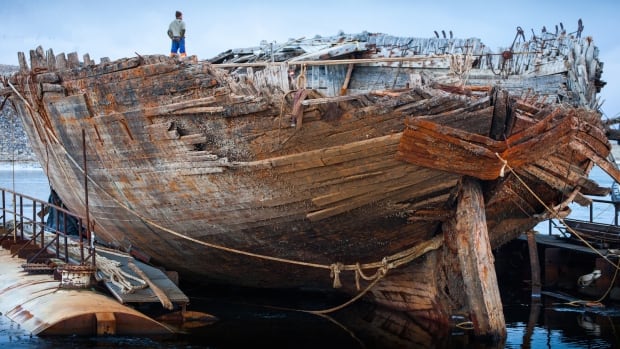
After resting at the bottom of the ocean for more then 85 years, Roald Amundsen's ship the Maud has been brought back to the surface, and is preparing to return to Norway. The ship, which was discovered off the coast of Cambridge Bay in Canada, helped to chart the Northeast Passage from 1918-1920, sunk in those waters back in 1930 after a short, but distinguished career in exploration.

A recovery team has spent the past six years working to bring the ship up from its watery grave. This past July, their efforts finally paid off, as the ship returned to the surface for the first time in more than eight decades. The crew first had to place a series of inflatable ballasts around the hull of the vessel, then slowly add air to them. Eventually this allowed them to place it on a barge and float it into harbor. Over the past two months, they have been been cleaning up the interior of the vessel in preparation for weathering the winter in the Arctic.

The recovery team says that the winter weather will actually help the ship, allowing its wooden hull to dry. This will help to reduce the ship's current weight, and will take some of the pressure off of the hull. That will help to stabilize it for the long journey back home to Norway, which is likely to take place next summer.

According to reports, the ship is in surprisingly good shape. The hull remains solid and strong, despite being at the bottom of the ocean for so long. The vessel was originally built back in 1917, and commissioned by Amundsen to accompany him on his exploration of the icy waters north of Russia. Amundsen is well know for is exploits in the cold places of our planet. He was the first person to reach the South Pole back in 1911, and was instrumental in exploring the Arctic as well, becoming the first person to full pass through the Northwest Passage.

The Maud was sold off in 1925, five years before she sank. But, she is considered an important piece of exploration history, and back home in Norway she'll be preserved for posterity. In that country, Amundsen is incredibly famous, and any relic left over from his expeditions is a valuable commodity.

This is quite a cool story. I'm glad this team was able to locate and recover the ship. Hopefully it makes it through the winter in one piece, and returns home next year as planned.

Jumat, 30 September 2016

Video: Climbing Downpatrick Head Sea Stack in Ireland

Located just 80 meters off the coast of Ireland, the DĂșn Briste sea stack is an indelible part of one of that country's most iconic landscapes – Downpatrick Head, where St. Patrick himself is said to have built a church centuries ago. While certainly an enticing challenge, the sea stack is seldom climbed, but last month that's exactly what Iain Miller and Paulina Kaniszewska did. In this short video, you'll see them paddle out to the rock face, make their ascent, and take in the views at the top, which include the remains of an old lookout post from World War II.

You can find out more about their experience by reading their account of the climb here. It looks like it was quite a fun adventure. Thanks for sharing Iian!

Kamis, 15 September 2016

168 Years After Sinking in the Arctic the HMS Terror has Been Found

After years of searching in the Arctic, the missing ship of explorer Sir John Franklin has been found at long last. Earlier this week it was announced that the HMS Terror, a vessel that Franklin was using to explore the icy waters of the Northwest Passage, had been found after 168 years.

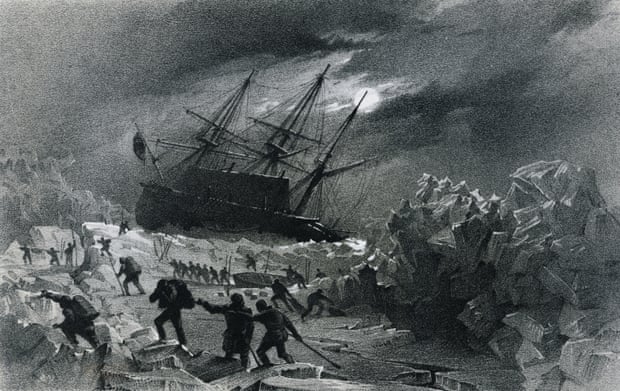
Franklin and his crew had been exploring the Arctic Ocean north of Canada back in 1848 when they ran into thick pack ice that prevented them from continuing their voyage. Both the Terror and its sister-ship, the HMS Erebus became trapped, forcing everyone onboard to abandon the two vessels. Eventually, all 129 members of the crew perished in the Arctic, and what became of the ships remained a mystery.

A few years back the Erebus was discovered by a search crew, but the location of the Terror remained a mystery. Now, thanks to a tip from a local Inuit tribesman, that mystery has been solved. The Terror  was found in – of all places – Terror Bay, where its mast was spotted sticking out of the ice by passing hunters a few years back. That tip led to an archeological team going to the site to check out the area, only to discover the very vessel they had been searching for.

According to early reports, it seems that the ship is in relatively good condition, and may contain most of the things that were left onboard when it was abandoned by Franklin and his crew. In comparison, the Erebus has suffered hull damage, and Arctic currents had spread out its contents over a wide area. It'll be some time before salvage crews can truly get a look at the Terror however, so just what might be on the ship remains a mystery.

As for Franklin and his men, it seems that after they abandoned their ships, they began a long and perilous march across the Arctic with the hopes of reaching the Hudson Bay Company – a fur trading outpost far to the south. None of the men made it to the safety of that place however, vanishing in desolate white expanse of the north. Inuit oral histories talk about the foreigners passing through their area, but their ultimate fate has never been fully told.

The disaster that beset the Franklin crew is one of the worst in British naval history. It was quite a blow to that country, which ruled the seas and was pushing the boundaries of exploration at the time. Now, after more than a century and a half, at least part of the mystery has been solved.

Rabu, 14 September 2016

Did Amelia Earhart Survive Her Crash in the Pacific?

One of the most compelling missing person's stories of the 20th century may have just gotten even more interesting. A member of The International Group for Historic Aircraft Recovery (TIGHAR) now claims that aviator Amelia Earhart not only survived her crash in South Pacific back in 1937, but she lived for days on a remote island, where she continuously called for help from her aircraft's radio, with those calls being picked up by amateur radio operators all over the world at the time. 

In recent years, TIGHAR has put considerable effort into searching for the remains of Earhart, her navigator Fred Noonan, and their aircraft. The group has made several expeditions to islands in the Pacific searching for evidence of what may have happened to her. They have found some compelling clues, but nothing that definitively says whether or not she or Noonan survived the crash, or even made it to one of the sites they have examined at all. 

But according to Ric Gillespie, a member of TIGHAR, Earhart's calls for help were heard by a woman in Melbourne, Australia; a housewife in Texas who claims to have recognized her voice, and perhaps most intriguing of all – a teenager in Florida. 

What makes the Florida teen's story so fascinating is that she scribbled notes based on what she was hearing, transcribing what was allegedly Earhart's broadcast. The teen wrote several times "New York, New York," seemingly referencing the city. But Gillespie believes that Earhart was actually saying "SS Norwich City," which was a ship that was abandoned on Nikumaroro island in 1929, the place that  TIGHAR believes the aviator set down. 

Today, we take flying around the world for granted, as thousands of aircraft take off from airports all over the globe each day. But back in 1937, it was still difficult to imagine circumnavigating the globe in a small aircraft. That was exactly what Earhart and Noonan were trying to do when they went missing. The pilot and navigator had set out from Lae Airfield in New Guinea the plan was to fly to Howland Island. But somewhere along the way they got off track, and couldn't find their destination. 

Eventually they ran out of fuel and crashed somewhere int he Pacific, but exactly where has long been a mystery. After examining the flight plan, listening to radio broadcasts, and plotting potential courses, TIGHAR has come to believe that Earhart and Noonan landed in a shallow bay off the shore of Nikumaroro, which has been the subject of their searches in recent years. So far, they've come up with nothing, but they hope to return next July – the 80th anniversary of Earhart's disappearance – to look for her Electra aircraft. The group believes that the tide has carried it out to sea, and that they'll be able to find it using a submersible.
Over the years, here at The Adventure Blog we've followed various attempts to locate the missing aircraft that Earhart was flying when she went missing. So far, it has remained elusive, as finding an 80 year old aircraft in the middle of the Pacific is not going to be easy. But, I have to admit TIGHAR has made some interesting finds over the years, including a piece of scrap metal that has been positively linked to the aircraft she was flying. Will they be able to finally substantiate their claims? We'll just have to wait until next summer to find out. 

Rabu, 31 Agustus 2016

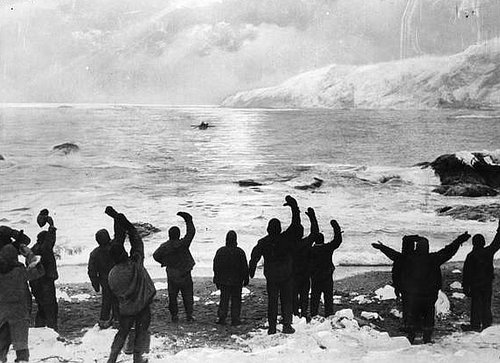
100 Years Ago Shackleton's Men Were Rescued From the Ice

Yesterday marked an auspicious day in the annals of exploration. It was exactly 100 years to the day since Ernest Shackleton's men were rescued from the ice in the Antarctic after a months-long ordeal that would eventually go down as one of the greatest tales of survival ever. The rescue brought and end to their struggles on that particular expedition, but returned them to a world gone mad by war.

Shackleton's tale is a well known one at this point. In August of 1914, he and his men set sail from London for the Antarctic where he and several of his men had hoped to launch an attempt to cross the frozen continent. As they left Europe behind, the first shots of what would become World War I were just taking place on that continent as well.

In December of 1914, Shackleton's ship – the aptly named Endurance – departed South Georgia Island for the Weddell Sea off the coast of Antarctica. Once there, the crew discovered more ice than they had expected, and by January 19, 1915 the ship was fully enveloped in ice, not allowing it to move forward or backward. For months, the Endurance and her crew were stuck in place, until the ship finally succumbed to the pressures being applied to its hull and sunk beneath the waters on November 21, 1915.

But the ordeal for Shackleton and is men were far from over. For weeks they camped on an ice floe before it cracked and broke up, forcing them into the Endurance's lifeboats in a desperate attempt to reach Elephant Island. They reached that point and stepped foot on solid ground for the first time in 497 days.


Knowing that he and his men couldn't hold out forever, Shackleton came up with a desperate plan to make an open water crossing to reach South Georgia again. On April 24, 1916 he and a few hand-picked men set out once again, surviving high seas, storms, and frigid conditions to reach their destination on May 8. They then made a harrowing trip across the island on foot to reach a whaling station on the other side where they could begin mounting a rescue operation at long last.

But once again the conditions in the Southern Ocean thwarted their plans and poor weather prevented them from going back to Elephant Island. On two separate occasions rescue missions were forced to abandon their attempts, although Shackleton persisted in his efforts to save his men. It took until August 30, 1916 to complete the rescue operation, retrieving 22 men who had remained in that desolate place for five more months. But in the end, not a single man perished on that expedition, which remains a remarkable feat to this day.

It took until May of 1917 for Shackleton to return to England, but but that point the war was at its most brutal. A small conflict that was breaking out when he and his men left for the Antarctic had turned into the bloodiest and most costly war that the world had ever seen. Millions had lost their lives since the Endurance had set sail, and hundreds of thousands more would perish before it was through. Some of them were men who had survived all those months on the ice.

I've said it before and I'll say it again. The story of Shackleton and his crew is one of the greatest stories of adventure and survival that we've ever seen. It is a testament to his leadership skills that they managed to stay alive at all, and I can't even imagine what it was like to be stranded under those conditions for so long.

Major thanks goes out to the Adventure Journal for reminding me of this important date in history.

Senin, 08 Agustus 2016

Video: Nat Geo Shares Earliest Archival Footage

Want to see the earliest archival video footage from National Geographic's extensive vault of films? The video below provides a glimpse of just that as it gives viewers a look at the 1903 Ziegler North Pole Expedition. The explorers that made up that team set out from Norway with plans to reach the North Pole. But, their ship got trapped in the ice and the group ended up stranded for a year. This video gives us a look at a bygone era in exploration and a sense of what it was like for that team as they set off into the unknown. Interesting stuff to be sure.