Tampilkan postingan dengan label Smartphones. Tampilkan semua postingan

Selasa, 13 September 2016

Gear Closet: JBL Reflect Mini BT Wireless Sport Headphones

In case you haven't heard, there is a new iPhone coming out this week. That's pretty much common knowledge considering how much press Apple gets. But what you might not have heard is that one of the design elements of the new smartphone that is getting the most attention is Apple's decision to drop the standard audio port. This has freed up some precious space inside the phone that Apple engineers can use to add more tech, but it also means that we can no longer simply plug in a standard set of headphones. Moving forward, the iPhone's lightning port will pull double duty for both charging and audio output, which means you'll need to either use a set of lightning earbuds, a lightning-to-3.5mm adapter (included in the box), or wireless headphones to listen to your music, podcasts, and audio books. While all of those are obviously viable solutions, Apple is making a hard push towards Bluetooth headphones, particularly since they are releasing their own unique entry into that market with the new AirPods and some updated wireless options from Beats.

I haven't had a chance to test out the AirPods yet, but I have been testing some other wireless headphones that are specifically designed for use by those of us who are fairly active. I actually made the switch to Bluetooth earbuds awhile ago, and I have to say that it is a niche shift. Not having to deal with cables while running or cycling is a major plus in my book, and I think that while some will continue to be reluctant to make the change, once you do, you'll never want to go back.

Recently I've been testing the new Reflect Mini BT sport headphones from JBL and have discovered a product that ticks all of the boxes in terms of what I'm looking for when it comes to earbuds. And while they may not be quite a fancy as Apple's AirPods in terms of design and technology, they still perform very well and cost a lot less.

The Reflect Mini use Bluetooth technology to connect wirelessly to your smartphone. There once was a time when that pairing process was a bit of hassle, but those days are long over at this point. It literally took just a few seconds to pair the two devices together, and after that when ever I turned on the headphones they would automatically connect with one another. That's the way all wireless audio devices should work, and that has pretty much been my experience with all of them for some time.


As with most wireless earbuds these days, the Reflect Mini comes with an inline remote that allows you to control volume, switch tracks, pause playback, and so on. It even has a built-in mic that gives you the ability to pick up incoming phone calls too. Those are fairly standard features at this point, but JBL has made them easy to use thanks to a remote that has large buttons and a simple, straight forward configuration.

I've tested wireless earbuds in the past, and one of the biggest challenges I've typically faced is finding the right sized rubber ear tips to fit into my ears properly. Some previous models I've tried out have come with as many as seven sets of those silicon inserts, and I'd usually have to mix and match to find the ones that worked best for me. The Reflect Mini ships with four ear tips – two sets of sports and two regular. But, this time out there was now fiddling to find the right fit. The ones that came preinstalled worked perfectly for me right out of the box, snapping into place and staying there while I ran. Obviously you may find that you'll have to play around with the tips a bit to find the ones that work for you, but I've never had fit this good before.

In terms of audio performance, I found these earbuds to be solid, but not overwhelming. Music sounds crips and clear, even at higher volumes, and there was even some solid bass mixed in, something you don't always find on smaller, sport-oriented earphones. The Reflect Minis probably aren't going to win any awards for their performance, but in terms of something that you want to wear out on a run or for a workout at the gym, they are definitely up to the challenge. I will note that some of the podcasts I listened to while wearing these headphones did sound a bit muddled at times, but that is probably more due to the quality of those recordings and less about the earbuds themselves. Music tracks, which have higher production values, sounded great, which is a better way to judge overall quality.

Battery life is the other element that always concerns me, as unlike standard earbuds you'll need to recharge your wireless models on a regular basis. JBL says that the battery is good for about 8 hours playback, although that number can vary depending on volume, audio source, and so on. In real-world testing, I found that I was getting closer to 6 hours of battery life, which for me translates to having to recharge after I've run with the earbuds four or five times. While I would like to get a bit more battery life out of the Reflect Mini, I've been mostly satisfied with their performance so far.

On that note, it doesn't seem that JBL has built-in an auto-off feature for the Reflect Mini, which means if you accidentally leave them on, you'll drain the battery somewhat even when they're not in use. When you're done working out, be sure to turn them off so they'll be charged for your next session.

Since these are earbuds designed for use while being active, they have been built to be sweat proof. That means that they can survive your wet hands pawing at the remote control or you working up a good sweat while running. That doesn't mean that they are water – or even rain – proof however, so keep that in mind when using them. I've had other wireless earbuds that were sweat proof in the past, and some would stop working if I used them on a run in the rain. I don't know if that will be the case here, as I haven't tried the Reflect Mini BT in the rain yet, but it is definitely something to keep in mind.

In terms of long term durability, we'll simply have to wait to see how well these earphones perform. Right now, they function very well, with great battery life, solid audio performance, and very few distortions or audio cut-outs while in use. But, some of the wireless earbuds I've used in the past haven't stood up to the test of time, wearing out after just a couple of months of use. Hopefully that won't be the case here, but only time will tell.

In terms of price, JBL has delivered a good product that performs very well, that won't make your wallet duck for cover. At just $99.95, the Refect Mini BT stacks up very well against the competition in terms of performance and value. Apple's new AirPods, which aren't specifically designed for use while exercising, cost $159, making them a bit pricer for those who are just entering the wireless earbud market.

Whether that's you, or if you're simply looking for a new pair of wireless earbuds, the JBL Reflect Mini BT is a good choice.


Selasa, 06 September 2016

Gear Closet: Kyocera Hydro Shore Waterproof Android Phone

Now days, most of us carry our smartphones with us wherever we go, including into the backcountry when we go hiking, camping, or backpacking. That's because those devices have proven invaluable just about anywhere we might travel, including places where cell network connections are at a premium. The problem is, most smartphones are also incredibly fragile, which means taking them with us on these adventures means putting our precious gadget in jeopardy, or shelling out extra cash for a case that is waterproof and rugged. But what if you could have a smartphone that is already designed to survive in that type of environment? Better yet, what if that device was also very affordable? That's exactly what you get with the Kyocera Hydro Shore, a budget phone designed to run on AT&T's GoPhone network.

First things first, it is important to note that in terms of onboard technology, the Hydro Shore features components that won't compete with high-end, flagship phones from competitors including the iPhone or the Samsung Galaxy S7. It's 5" high-def display is bright and colorful, but not on par with those found in more expensive phones, and its 1.1 GHz Snapdragon processor is under powered at this point of its lifecycle. Additionally, the Hydro Shore's 5-megapixel main camera won't win any awards either and lags behind the competition in performance as well. On top of that, the device comes with just 8GB of onboard storage and 1GB of RAM, which is underwhelming when compared to other smartphones too. As if that wasn't enough, the device runs the Android 5.1 (Lollipop) operating system, which is two full versions out of date at this point, with no clear upgrade path moving forward. Taken as a whole, that makes this a fairly average Android device to say the least, and well behind much of the competition in what has become an increasingly crowded market.

So what exactly does the Hydro Shore have going for it? For starters, it is very affordable. The device carries a price tag of just $79.99, which puts it amongst the least expensive smartphones on the market at the moment. It also has expandable storage capacity through the use of memory cards (up to 64GB), and it features a design that makes it easy to grip and use with one hand – something that we shouldn't take for granted in an era where smartphones continue to expand in size. Plus, the phone has solid battery life – up to 13 hours of talk time – which is better than most of the competition too.


But best of all, the Hydro Shore also happens to be waterproof, which is certainly not something you find at the $80 price point all that often. In fact, the device is certified IP57 waterproof, which means that it can be fully immersed in up to 1 meter (3-feet) of water for 30 minutes without harm. That means that it should survive rainstorms, kayaking trips, and accidental dunkings, which is not something you can say about most other smartphones on the market regardless of price point.

And since the Hydro Shore was built for use around water (hence the name!), its 5" screen was made to be interacted with even when you have wet hands. That means you can snap photos, make a call, or send a text no matter the conditions. I personally appreciate this feature after a long run, which is when my sweaty hands can sometimes make it a challenge to interact with my iPhone too.

The Hydro Shore's case is made from a soft, easy-to-grip material that provides a measure of protection from accidental drops, but isn't as durable as some other ruggedized phones that I've seen, including the Samsung Galaxy S7 Active.  Samsung's offering is bulkier, heavier, and costs more, but includes better waterproofing, a shatter-resistant screen, and a host of other tech features, such as wireless charging. That said, the Hydro Shore feels like it can survive quite a bit of punishment, although you may still want to add a case for a bit of extra protection.

In addition to its waterproof design and great pice, the Hydro Shore's other best feature may be that it connects to AT&T's GoPhone network, which is available through Walmart. Not only does this give consumers an option to purchase phones and services without a yearly contract, it offers affordable voice, text, and damage usage too. Plans start as low as $30 a month, although the top-end option runs $60 and includes unlimited talk and texts from the U.S. and Canada, as well as voice, text, and data usage while in those countries as well. That makes GoPhone and the Hydro Shore an intriguing and affordable option for anyone who frequents those destinations, even if they happen to own another smartphone.

As a self-confessed tech nerd, I have to say that there isn't a lot to get too excited about technology wise with this device. Its specs clearly lags behind the competition in nearly every way. But, as someone who travels a lot, and often visits remote places, the fact that they Hydro Shore is waterproof is certainly a major benefit as is the GoPhone options for use in the U.S., Canada, and Mexico. If you happen to visit those places on a regular basis, and want a solid, reliable phone for use while traveling, this is a great option. It is tough, dependable, and has great battery life. Additionally, it is also so affordable that you can actually keep your high end phone and this one too.

Find out more at the Hydro Shore official website.

Senin, 22 Agustus 2016

Gear Closet: The Zus Ruggedized Charging Cable is a Fantastic Travel Accessory

These days when we travel we always carry a host of gadgets with us. In fact, depending on the trip I'm taking, I often have a wide variety of devices that I need to keep charged while on the go. Those include a smartphone, tablet, and at various times a rechargeable headlamp, smartwatch, water purifier, headphones, and more. In order to keep all of those items from becoming nothing more than dead weight, you'll also need to carry charging cables, most of which are not designed for use in the back country or withstand the rigors that are often placed on them when traveling. But fortunately, there are some options on the market that are built to survive, even in remote environments, making the ruggedized charging cable a must have for outdoor adventurers.

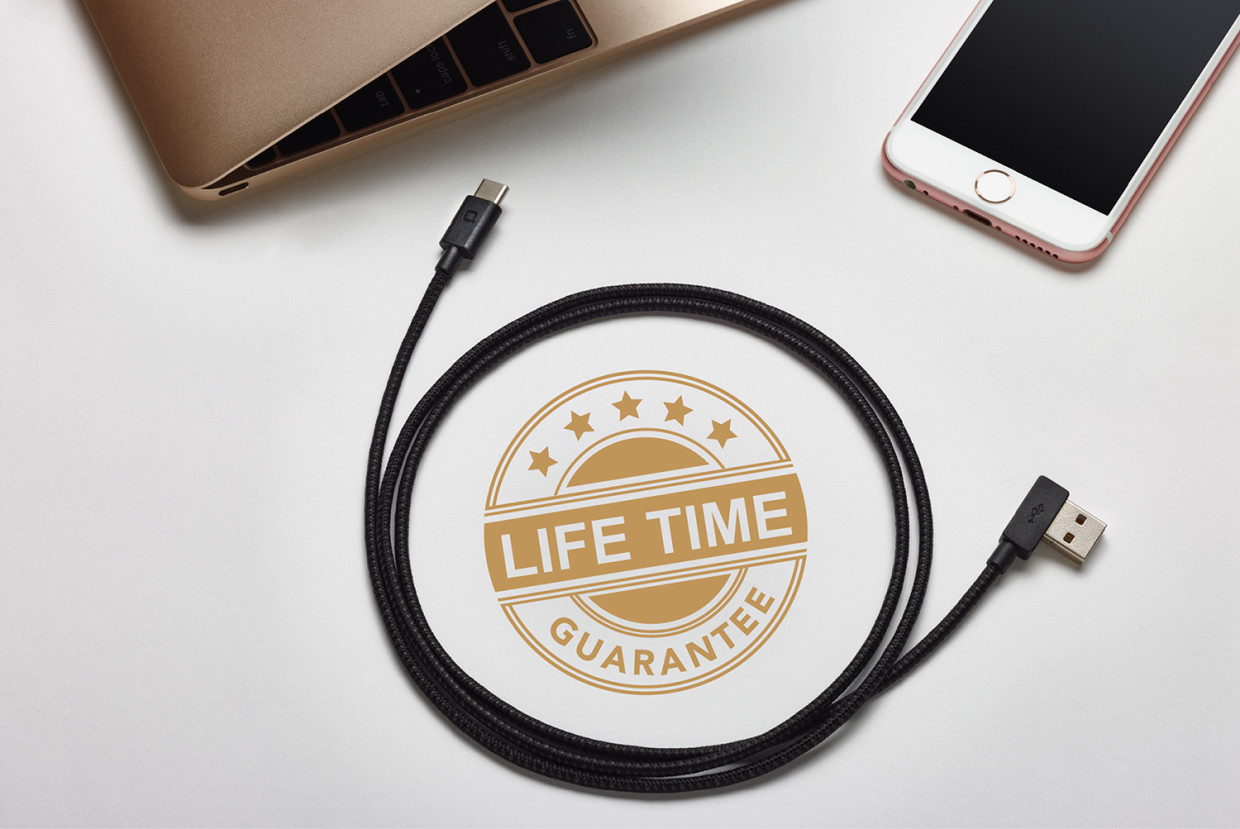
One such cable is the ZUS from Nonda. Encased in an outer shell of tough nylon braiding over a thin PVC tube, and made up of protected aramid fibers, this cable was built from the ground up to survive darn near anything. In fact, the ZUS was tested in the lab and survived being bent more than 15,000 times without suffering damage. But if that wasn't enough to convince you, it is also backed by a lifetime guarantee.

Available in standard micro-USB, USB-C, and Apple Lightning versions, the ZUS cable definitely feels more substantial in your hands than most other charging cables I've used, especially those that come directly from a device manufacturer. There is a clearly defined resistance in the cable that you can feel as you use it that simply provides a sense that even though you're twisting it about, it isn't doing any kind of damage to the cable itself.

Speaking of twisting it about, the ZUS has also been built to be tangle free, which is something I appreciate when traveling. The materials used to create this cable also prevent it from wrapping up around itself, which means you can pull it out of your pack and plug it into your device and charging solution within a matter of seconds. If you're carrying multiple cables with you, this feature is even more handy, and the ZUS doesn't end up wrapping itself around them. And since it comes with its own built-in Velcro tie, it is extremely easy to keep it organized too.


I've been using the ZUS on a number of my summer trips ranging from up-state New York to the wilds of Mongolia to the craziness that is Outdoor Retailer, and beyond. I have found that it has now become my go-to cable whenever I need to charge something. Partly because it is easy to pull it out and plug it in, but mostly because I know it will survive whatever I throw at it. Moving forward, it is likely that I'll replace all of my cables with the ZUS as it just happens to be a great choice for the adventure traveler.

If I had one complaint about the design of this cable it would be that the USB plug is turned at a 90ยบ angle over what you are most likely accustomed to. Nonda says that this is to improve its compatibility with the ZUS car charger (which I reviewed here!), but I found it to be not as handy when plugging it into other charging units, including the battery packs that I carry with me when I hit the road. A most standard approach to the plug layout would have been more useful for me in general, and I suspect others might find similar challenges from time to time.

That said, this is an extremely well built cable that travelers will appreciate immensely. And at just $19.95, it isn't priced all that much more than most other cables on the market, while being less expensive than other ruggedized cables that I've come across.

A review of charging cables certainly isn't as sexy as the latest boots, sleeping bags, and jackets from our favorite outdoor companies, but it is still a product that most of us use on a daily basis. In this case, we're getting a cable that is built specifically for road warriors and outdoor adventurers, something that can't be said about most. If you happen to find yourself breaking or fraying your charging cables while out in the field, give the ZUS a look. I think you'll be happy with the the $20 investment, which will survive just about anywhere that you take it.