Tampilkan postingan dengan label Adventure Travel. Tampilkan semua postingan

Senin, 03 Oktober 2016

Gear Closet: Petzl Reactik+ Headlamp

It seems all of our electronic gadgets are getting smarter these days. First came the smartphone of course, then tablet computers, and smartwatches too. Now, thanks to the the Reactik+ from Petzl, we can add "smart" headlamps to the list too.

What makes the Reactik+ so smart you ask? Well for starters, it comes with Bluetooth wireless technology baked in that allows it to connect to your smartphone and control its functionality using a special MyPetzl mobile app. That app gives users the ability to control the brightness of their lamp yourself, or tell it what type of activity you'll be doing, and for how long, which gives the device the ability to set its own brightness levels based on how much power is lift it is rechargeable battery. The app has preset profiles for sports like trail running, mountaineering, hiking, or simply just hanging out around the campsite. You can also add your own custom profiles as well, allowing you to dial in exactly the performance you need.

At its brightest setting, the Reactik+ can crank out as much as 300 lumens of light, which is plenty for just about anything you want to do outside. On that level, it the headlamp can run for about 2.5 hours, but you can adjust the burn time for 5 or 10 hours as well, and the lamp will automatically regulate itself to achieve that length of time. This ability to extend the life of the Reactik+'s battery comes in handy if you find yourself out on the trail for longer than you expected, or you don't have a handy way to recharge the device while in the field.


The Reactik+ has several different lighting modes to help you navigate through the darkness. For instance, it features a proximity beam that diffuse the light across a wider area, as well as a focused beam that acts as a bright spotlight for when you just need to see as far ahead as possible. Of course, it also comes with a red light mode, which is handy around he campsite when you don't want to burn out the retinas of your friends who are accompany you on your outdoor adventure.

Designed to be tough and weather resistant, I recently put this headlamp to the test on a backpacking trip to Bryce Canyon where the rain was coming down sideways. Despite those poor conditions however, the Reactik+ performed admirably, surviving some of the worst weather that part of the country has seen in years, and continuing to work well. After that experience, I feel confident that this light will work great in just about any weather, with perhaps the exception of extreme cold. Frigid temps can put a strain on the life of the built in rechargeable battery, although this is something that plagues most other headlamps too.

Other features of this headlamp that I really like include a washable headband, which is a must for those of us who live in warm climates and will run with this light on our heads. I also appreciate the ability to lock-out the power source, preventing the lamps from accidentally turning on while in our packs and running down the battery. Petzl has even given the headlamp the ability to use a standard battery pack that employs AA batteries for power instead. This battery pack is sold separately, but it is nice to have the option none the less.

In terms of performance, I love all of the technology that this headlamp brings to the table. It's "smart" features work great, and I appreciate its ability to dial in just the right level of lighting to get me through a long run or a night hike back to camp. The MyPetzl app is simple to use, connects to the Reactik+ quickly and easily, and is versatile enough to allow you to fine tune things to your own liking. My only complaint is that I wish it had Apple Watch support that would allow me to adjust the light's settings on the fly without having to retrieve my iPhone from my pack or wrist strap.

At $109.95, the Petzl Reactik+ is on the expensive side in terms of headlamps. But, if you're an active outdoor athlete who runs, bikes, climbs, or hikes a lot, you may very well appreciate all of the tech features that it brings to the table. As a gadget-nerd myself, I know I certainly do. However, if you're just looking for a very good headlamp that you can take with you on your adventures, the standard Reactik may be a better choice. It performs much the same way as the "+" model, but without the "smart" features. It also sells for $84.95, making it a bit less expensive. Either way, you'll get an excellent headlamp that is comfortable to wear, versatile to use in the field, and very powerful at lighting your way.

Purchase your Reactik+ at REI.com or CampSaver.com.


REACTIK + Bluetooth headlamp with Reactive Lighting Technology from Petzl-sport on Vimeo.

Jumat, 30 September 2016

Gear Closet: Gear Aid Flux LED Light and Power Station

When I traveled to the 2016 Outdoor Retailer convention in Salt Lake City this past summer I had the opportunity to meet with a number of companies who are making great gear for use in our outdoor pursuits. As usual, there were a number of trends that shone through, including gear getting lighter, more eco-friendly, and improving performance in inclement weather. But, there was also another trend that was easy to notice with numerous gear manufacturers putting an emphasis on better lighting solutions for use around our campsites. In the weeks ahead, you're going to see some of these products begin to make their way onto the market, and several of them are truly going to revolutionize the way we illuminate the campgrounds. The first of these to cross my desk is an incredibly bright and powerful LED lantern from a company called Gear Aid, whose new Flux light will prove very handy in a wide variety of situations.

The first thing you'll notice about the Flux is that it is extremely rugged and durable. Gear Aid spared no expense in creating a light that can survive in just about any environment, including a campsite, warehouse, or garage. Housed in a tough plastic suit of armor, my test unit has survived several serious drops onto a variety of hard surfaces, and has come away without nary a scratch. On top of that, the Flux is also water resistant, which means you should have a bright source of light no matter the weather conditions.

Did I mention that this lantern was bright? With 82 individual LEDs onboard, it can crank out as much as 640 lumens of light on its highest setting. At that level of brightness, the Flux's built-in rechargeable battery – which is rated at a whopping 20,800 mAh – can power the light for up to 13 hours. Turn it down to a much more modest 20 lumens – the Flux's lowest setting – and the burn time increases to an impressive 192 hours. That should be enough to get you through just about any camp outing. And since it has 10 brightness settings, and three color temperatures, you'll always be able to find just the right lighting for to meet your needs.


That massive rechargeable lithium-ion battery can be put to other uses too however. The Flux comes equipped with 1.5-amp USB port that can be used to power-up your electronic devices, including smartphones, tablets, cameras, headlamps, and other gadgets. In fact, the Flux can recharge your iPhone 10 times over, and still have some juice left to power the light.

To add yet another level of versatility to this lantern, Gear Aid has created a series of mounts that allow you use the Flux in a number of different settings. For instance, I tested a magnetic mount that comes in hand when you need to attach the lantern to a car for instance, while a claw mount clips to a pole or similarly shaped attachment. The Flux also comes with a handy built-in kickstand, and a special adapter that is sold separately allows it to work with any GoPro mounts as well.

As if that wasn't enough, the Flux has a couple of other nice tricks up its sleeve. For instance, it can be set to SOS mode to signal for help should you find yourself in trouble in the backcountry, and it ships with a hanging hook and diffuser bag for use inside a tent too. In short, it seems Gear Aid has considered just about everything when designing this lantern.

The Flux doesn't come without a few compromises however, the biggest of which is its size. It is a burly beast when compared to some other camp lights on the market, and those amongst us who count every ounce will likely want to pass on this option. It does take up a considerable amount of room in your pack, and adds some weight too. That will make some hesitate when carrying it into the backcountry, although if you don't mind a slightly heavier load, it does deliver a lot of functionality.

Personally, I like the Flux a lot because it can be used in so many different ways. Yes, it is great to have at a campsite, as it can obviously light up a large space with ease. It is also nice to have a portable power generator to keep electronic devices working too. But, this light is also really handy for working in the garage or basement too, especially if light is at a premium.

The Flux is just one lighting option in a new series of lanterns from Gear Aid. It's siblings, the ARC and Spark offer similar performance in smaller and lighter packages, with the trade-off being lower brightness and less burn time due to smaller batteries. If you like what you see in the Flux, but would like something smaller and lighter, one of those options just might fit the bill instead.

Priced at $149.95, the Flux is very competitively priced, particularly when you consider everything that it brings to the table. It is bright, extremely durable, water resistant, and has great battery life. It can also recharge your other electronic devices and thanks to a clever mounting system, it can be used in a wide variety of ways. If you're in need of a good lamp around the campsite or elsewhere, this is a worthy option to consider. In terms of pure, raw performance, it is tough to beat the Flux right now.

Kamis, 29 September 2016

Adventure Tech: goTenna Extends Backcountry Communication with New goTenna Mesh

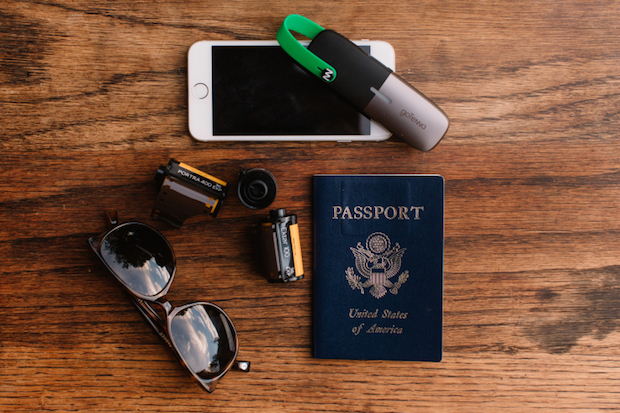
Earlier in the year I took a look at an innovative method for staying in communication while in the backcountry called goTenna. This simple, but effective device, connects to your smartphone via Bluetooth technology, and allows you to send text messages and share your GPS location with others who are equipped with a goTenna of their own. In a sense, the device creates its own data network for use in places where shell service is nonexistent, and while it doesn't facilitate voice comms, I found it very useful for staying in touch nonetheless. Now, the team at goTenna is back with a new product, and while it works in much the same way as its predecessor, it has the potential to extend the range of the device much, much further.

Dubbed the goTenna Mesh, this new unit launched on Kickstarter yesterday. A bit smaller than the original model, this new device brings some interesting new technologies to the table that should make it more useful to travelers, backpackers, climbers, and other outdoor enthusiasts. For instance, the Mesh now operates on UHF radio frequencies, which have brought it's out-of-the-box range down slightly, but make it more adaptable to a wider variety of environments, including both the outdoors and interior spaces. Switching to UHF has also allowed goTenna to bring their product abroad too, opening it up for sale in foreign countries where the previous generation's VHF radio waves were not allowed.

But more importantly, as it's name implies, the goTenna Mesh brings "meshing" technology to users as well. This allows the device to relay data that is sent to it on to other users, thereby extending the range almost indefinitely. Where as the original goTenna simply blasted out the messages that it broadcasted to all other goTenna users in range, the Mesh can analyze the data, and then rebroadcast it to others too. In this way a message that is sent can potentially reach a recipient, even if they weren't in range of the original sender.


The first generation goTenna has a range of about 1 mile in urban settings and 4 miles in rural areas, although greater ranges can be achieved depending on elevation and so on. The goTenna Mesh has a similar range when used for peer-to-peer communications, with 1 mile in cities and 3 miles in the backcountry. But, since it has the ability to relay data, a message can hop from one device to the next, provide there are several of them working within range of one another. So while two Mesh devices might have a range of roughly three miles, three or four units working together could stretch that range considerably further.

When goTenna launched the Kickstarter campaign for the new Mesh model it was with the hopes that it would generate $150,000 in crowdfunding to help get the device into production. Just 24 hours later, the campaign has generated $132,000 and climbing. That means that the new product should begin shipping in December as expected, with a price tag of $179 for two units. Of course, a third goTenna Mesh is really needed to see the true benefits of this second generation model, but this is certainly a good start. Early-bird contributors can reserve their goTenna Mesh units for as little as $129 by pledging to support the Kickstarter campaign now however.

In addition to revealing the Mesh, the company is also launching a new service called goTenna Plus. Users who sign up for this plan receive additional benefits from the goTenna app that is installed on their iPhone or Android device, including improved topographic maps for sharing your location, tracking of speed and distance while out hiking, and even sharing your current location with a designated individual on a set schedule, much like a SPOT Satellite Messenger. goTenna Plus users can also take advantage of network relaying which allows a device that is connected to a cell network to pass along goTenna messages to other users in that way too.

goTenna Plus is normally priced at $29 for a year, but is currently available at an introductory price of just $10. Seems like a pretty reasonable rate to me.

Find out more about goTenna and all of its gadgets at goTenna.com.


Selasa, 27 September 2016

Video: Adventure Travel in the Alaskan Arctic

I came across this video on Richard Bang's YouTube Channel and thought it was worth sharing. It is a short film made be adventure traveler Connor Callaghan, who takes us along with him to Alaska where we enjoy a taste of some of the amazing scenery and activities that are available there. Alaska happens to be one of my favorite destinations, as it is brimming with great opportunities for outdoor adventure. Take a look at the clip, then put it on your list of places to see.

Nat Geo Gives Us the Best Outdoor Towns in the World

Looking for a great town to serve as base camp for your next outdoor adventure? Thinking about relocating to a place that offers more opportunities to pursue the things you love? Why not let National Geographic help with their picks for the world's best towns for outdoor thrills.
Some of the places earning a nod include towns that you would expect. Places like Moab, Utah and El Chaltén, Argentina. Others are a bit more unexpected, such as Niseko, Japan or Ely, Minnesota. It isn't as if those places weren't known for being great outdoor destinations, but to see them ranked amongst the very best (Nat Geo names nine places in total), is refreshing to say the least.

Each place is also accompanied by a nice description of why it deserves a spot on this very distinguished list with details on what it has to offer for visitors. Nat Geo even provided information on when it is the best time of the year to visit to take advantage of the opportunities that each place has to offer. For instance, summer can be hot in Moab, so September is a good time to go, although the author says not to overlook winter as well. Meanwhile, if you're planning on going to Niseko it is probably for the skiing, which is best between December and February.

Of course, with such a short list some places had to be left off, but there were a few surprises for towns that do not appear here. For instance, Chamonix, France is considered one of the great outdoor meccas of the world and yet it doesn't appear on Nat Geo's radar. Similarly, you could just as easily have substituted places like Boulder, Colorado or Jackson Hole, Wyoming, amongst other great mountain towns in the U.S. Still, the places that were selected are very deserving, and bring a nice exotic flair to the list with places like Australia, South Africa, India, and Peru enticing travelers.

To find out which places made the cut, read the entire list here. Then come back and leave a comment with the places that you think should have made the cut. After all, some of your favorite places probably didn't make it.

Senin, 19 September 2016

On the Road Again - Backpacking Bryce Canyon


It seems I've been home for an all-too-brief stay, but its time to go on the road again. This time, I'm headed for Bryce Canyon National Park in Utah where I'll be backpacking for the rest of the week with the fine folks at REI Adventures. This trip was actually organized by the REI retail team, so over the next few days I'll be joining some other outdoor writers in testing some of the latest and greatest gear from that company.  That means I'll be off the gird for the rest of the week, with no updates to The Adventure Blog in the meantime. But, I should be back at it next week. In the meantime, I'm looking forward to seeing Bryce, a national park I haven't visited yet. I'm sure I'll have a story or two to share from the experience as well.

Gear Closet: Osprey Manta AG 28 Daypack

If you're a regular reader of my "Gear Closet" stories here at The Adventure Blog, you probably already know the I have a habit of going on at great length about the product that I'm writing a review for. That is likely to be the case with the Manta AG 28 from Osprey as well, but for those of you who would rather get to the bottom line on this bag, I thought I would save you some time. So, for those folks wondering whether or not this pack will get a good review, let me just tell you now. It is amazing. Go buy one. Thank me later.

For those of you who are still around, we can now get into the details.

The Manta line of packs have been a part of the Osprey catalog for some time. But this pack, which was released this past spring, adds a nice new dimension that truly helps to separate it from the crowd. The "AG" in the bag's title stands for "Anti-Gravity" which is the name given to Osprey's innovative suspension that not only helps the pack to sit more comfortably and naturally on your body, but it can effectively carry more weight over a longer distance too.

The Anti-Gravity suspension was first introduced on Osprey's Atmos series, which is designed for backpacking and adventure travel. But now, it has trickled down to these daypacks as well. The suspension really does make a noticeable difference, and the integration of the mesh backpanel plays a big role in keeping you cooler and drier while hiking.

I have to say that I was a bit skeptical that the AG system would have as big of an impact on a daypack as it does on the larger backpacking models. But, after putting this bag to the test in the field, I can honestly say that my doubts were unfounded. The suspension is remarkable, and I think you'll find yourself coming off the trail at the end of the day feeling much better than you would with a traditional daypack without AG integration.


The Manta comes in three sizes – 20L, 28L, and 36L. (There is also a women's specific model called the Mira that comes in 18, 26, 34-liter models.) For me, the 28L version is the sweet spot for a daypack, offering plenty of room to carry everything you need, without getting so large that its starting to infringe on the small backpacking pack level. Of course, your particular needs may be a bit different than mine, but I found the 28L Manta to be just right.

As you would expect from a pack from Osprey, the Manta comes with a wide variety of pockets to store all of your gear. From its cavernous main chamber to the front pocket with mesh organizational sleeves – complete with key fob – this pack has plenty of ways to keep all of your important items organized and close at hand. There are also two surprisingly large pockets on the hipbelt as well, which I always appreciate for storage of small items such as snacks or my phone.

In terms of staying hydrated, the Manta comes with dual water bottle holders that can be found on each side of the bag, as well as a dedicated hydration sleeve. Osprey even throws in a high-quality 2.5 liter hydration bladder, which is a nice addition considering many companies require you to buy one separately. Considering the price of this pack, and all of the features it brings to the table, it was really nice to open the hydration sleeve and find the bladder tucked away inside.

That isn't the only nice little detail that Osprey has included on this pack. It also comes with its own integrated rainfly, which should be a common practice these days, but surprisingly isn't. There is also a helmet attachment loop for when you're cycling or climbing, and stretch mesh front pockets for quickly storing away extra gear, including a spare pare of shoes. Of course, Osprey has made always been good about paying attention to details, but it is nice to see that tradition continue here.

All of these features aside, the best thing about this pack is just how comfortable it feels when you're out on a hike. I can load it up with just a few small items, or stuff it to the brim with way more gear than I'll need, and it not only happily swallows up everything I throw at it, it feels good on your back too. The AG suspension is a true revelation, and a welcome addition to the daypack line. And of course, this being Osprey, the pack is very durable too, but still comes backed with the All Mighty Guarantee, which says the company will repair or replace the bag for its lifetime. You can't ask for better coverage than that.

As if all of that weren't enough, the Manta AG 28 costs just $165, which is a relative bargain when you consider everything this pack brings to the table. It is filled with excellent design decisions, includes the best suspension system on the market, offers lots of carrying capacity, and it is durable enough to survive just about anything you throw at it. It also comes with a built-in rain cover and has an excellent hydration sleeve that you'll want to use in all of your other packs as well. All of that adds up to an excellent daypack that you'll certainly want to have with you on your future hikes and adventure travel excursions.

This is the best daypack I've ever used, bar none. I think you're going to love it too. But it now at REI.com, CampSaver, or Backwoods.


Osprey Packs | Manta/Mira AG™ Product Tour from Osprey Packs on Vimeo.

Jumat, 16 September 2016

Colorado Adventures: Fly Fishing in Crested Butte

Earlier in the week I shared a post on my recent trip to Crested Butte, Colorado where I had an amazing time exploring the mountain biking trails there. If you read that piece, you already know that CB is considered one of the birth places of mountain biking, and as such there are plenty of trails to ride. In fact, there are more than 750 miles of trail, spread out over 150 different routes. That's enough to keep even the most dedicated rider busy for awhile.

But, Crested Butte isn't just a great mountain biking destination, as it has a lot to offer other visitors too. For instance, in the winter it has excellent skiing both at the Crested Butte Mountain Resort and backcountry options for the more adventurous. There is also plenty of great snowshoeing and nordic skiing too, if you prefer your winter adventures with a bit less adrenaline-fueled downhill action. During the warmer months, the hiking and trail running routes are spectacular, and the most of the mountain bike trails can be done on horseback too. This being Colorado, there also plenty of options for camping, climbing, and paddling as well, with even some good whitewater to run.

While I didn't have the chance to try each of those activities while I was in town, I did get the chance to do a little fly fishing. And while I'm mostly a beginner at that sport, I found it to be a relaxing, yet still engaging, way to explore the local culture.

For my fly-fishing experience we drove about 20 minutes outside of Crested Butte to reach the Three Rivers Resort, located in the small town of Almont. Three Rivers not only has a some wonderful rooms, cabins, and houses for visitors to rent, it also offers some active day-trips for those looking for some adventure. In addition to guiding rafting and kayaking excursions, travelers can also book stand-up paddleboard sessions, and skiing and snowboarding outings during the winter months. They also have a knowledgable and friendly staff in a well-stocked tackle shop for local and visiting anglers, as well a guide service that can get you out on the water and reeling in fish in no time.


We dropped by one morning to find out what fish were biting (trout and salmon it turns out!) and to hire one of the guides to take us out on the Taylor River. His name was Patrick, and he brought years of experience and excellent knowledge not only about the best places to fish in the area, but the different ways of setting up your pole to try to land a few big ones. As someone who has fly fished before, but is still relatively new to the sport, he proved to be an invaluable asset out on the water.

For those who have never fly fished, there is a bit of skill involved with learning to cast, letting your line drift, setting the hook, and bringing a fish to shore. All that can be picked up fairly quickly however, and after a brief refresher course, I soon found myself casting relatively efficiently. Patrick provided good tips on how and where to cast our lines, and he gave plenty of encouragement as we stood hip-deep in the refreshingly cool river.

It is often said that fly fishing is a bit of a zen-inducing activity, and after spending a couple of hours out on the water, I began to understand why. There is certainly a skill to getting the casting motion down, and the patience required to lure in a fish requires a sense of calm. Add in a dramatically beautiful back drop like the ones found in Gunnison County, and you have all the ingredients for a great day. Standing in the middle of that river, watching salmon swimming upstream around you, while learning to cast efficiently was an amazing experience, and even though we didn't end up landing any fish that day, it was still a terrific way to spend the morning.

That isn't to say we didn't have several bites. On more than one occasion our lures were stuck hard by a salmon or trout, and just like that we found ourselves with fight on our hands. On some occasions, the fish would leap clear out of the water in an effort to free themselves from the line, while others escaped just before we could get them into the net. Considering this was a catch-and-release stream, we didn't end up minding too much, and half the fun was just getting them to strike our lures in the first place.

One sure sign that you're having a great time on any outdoor adventure is when you look at your watch and are shocked to see how much time has passed. That was exactly the case during our fly fishing excursion. Before I knew it, several hours had gone by and it was time to move on to another activity. But, after even that brief time in the water, I think it's safe to say I'm hooked (ha!) and I'm already looking forward to my next opportunity to give it a go again. It will be tough to match the landscape I was immersed in while visiting Crested Butte though, as the surrounding mountains looming overhead were exactly what you'd expect for a fantastic fishing trip.

If you're headed to CB and you're looking to take a break from mountain biking or hiking, or you're simply looking to go fly fishing while you're in the area, the Three Rivers Resort will certainly do a great job of helping you land some fish. Even if you don't hire one of their guides to lead you out on the water, drop by their tackles shop to pick up any items you might need, and get some hints and tips on where to go and what is biting. They'll be more than happy to help you out. Check out the resorts website here.

After my all-too-brief fly-fishing experience, it was time to move on to more mountain biking. Obviously that was not something that I would object to, but the next time I visited Crested Butte, you can bet that fishing will be back on the agenda. If you're headed that direction, it should be on yours too.

Rabu, 14 September 2016

Colorado Adventures: Mountain Biking Crested Butte

Last week I had the opportunity to visit Crested Butte, Colorado – a place I had heard about for a long time, but had never had the chance to see for myself before. As an adventure destination, CB's reputation proceeded it, as I had long heard that it was a great place to go mountain biking. As it turns out, the town easily exceeded my expectations, delivering great opportunities for riders of all skill levels.

For those that don't know, Crested Butte is considered one of the birthplaces of mountain biking. As far back as 1976 local riders were heading out across mountain passes on single-speed bikes that were hardly made for the conditions. In the 80's the sport really started to gain traction as riders took part in a number of grueling races and group rides, including the Pearl Pass Tour, which has been around for nearly four decades. CB is even home to the oldest mountain bike association in the world, something that they are rightfully proud of.

Located about 4.5 hours southwest of Denver by car (or a short hop to the Gunnison-Crested Butte Regional Airport), Crested Butte is a quintessential mountain town, complete with plenty of outdoor activities and surrounded by breathtaking scenery. With just 1500 permanent residents, you would expect it to be a sleepy little place, but the opposite is actually true. Not only is CB home to an interesting and eclectic blend of locals, it has plenty of visitors who come to partake in its outdoor playground pretty much any time of the year.

During the winter, the town is a wonderful ski destination, with Crested Butte Mountain Resort just minutes away. With more than 120 ski runs, and an average snowfall of about 300" (7.6 meters) each year, it has plenty to offer snowboarders and skiers alike. And for the more adventurous amongst us, the area also has outstanding backcountry opportunities as well, giving visitors a chance to shred untouched powder on a regular basis.

My visit came just after the end of the summer rush, but still prior to the start of the fall season, when the local aspen trees begin to take on their legendary golden hues. At some of the higher elevations that was already starting to happen, giving me a hint of what was to come. But while I was there summer was still in full swing, with cool mornings but warm afternoons that were perfect for hitting the trail.


With more than 750 miles of trails to explore, my four days in Crested Butte was only going to be enough to give me a small taste of what the area has to offer. Still, it was enough to give me an idea of what to expect, and it most definitely did not disappoint.

One of the things that I loved about Crested Butte was that riders can access a wide variety of trails without ever having to load their bike onto a vehicle. You can quite literally hop into the saddle and set off down the road, and be on a spectacular trail within a matter of minutes. As someone who has to drive a half hour or more just to reach a decent mountain biking trail, this came as quite refreshing change of pace.

On my first ride, I grabbed a rental bike from The Alpineer, a local bike shop with a very knowledgeable staff that will not only set you up with a great bike, but give you some good intel on where to head out for a ride too. After getting acquainted with my bike, I was soon headed off down the road in search of a trail. After about 10 or 15 minutes on pavement, my tires found some dirt at last.

For that afternoon, I rode the Lupine Trail which I'm told is covered in wildflowers throughout the summer. My guide for the ride was none other than Janae Pritchett of Colorado Backcountry Outfitters, and organization that not only teaches mountain biking but organizes excursions into the surrounding mountains on both bikes and skis. Janae offered plenty of insight into the local bike scene, and even had some good tips to help improve my own riding.

The Lupine Trail is listed at an intermediate difficulty, which I would say was pretty accurate. It was also the perfect for for me, as my lungs hadn't acclimated to the altitude just yet (CB is located at about 8500 ft (2590 meters), and often left gasping for air on some of the approach hills. If you're a low-lander like me, keep this in mind when you first start to ride. I'm in excellent physical condition, but still had a difficult time keeping up.

The seven-mile long Lupine Trail isn't very technical, but it does offer some great scenery and flows along very nicely. You'll have some nice downhill sections, but nothing overly crazy, and the climbs aren't particularly challenging unless you're still getting acclimated like I was. Even then, it was a fairly easy ride that even beginner mountain bikers will be able to appreciate.

The end of the trail deposited us out onto a paved road, which we used to access another trail system that would take us back into town. This time we road the Upper Lower Loop, which was an offshoot of the Lower Loop trail. The latter offers an easier ride back into Crested Butte, but if you want more of a challenge, with some technical aspects, then head to the Upper Lower. Both provide spectacular views that are worth the effort.

With my first taste of Crested Butte mountain biking under my belt, I was eager to see what else the area had to offer. On my second day of riding I caught the local bus (free!) up to Crested Butte Mountain Resort, where I grabbed another bike from the rental shop. This time out, I would be riding a downhill bike, which felt very different from the all-mountain machine I had the day before. After getting acquainted with this bike, I grabbed a ride on one of the lifts that whisked me away to the top of the mountain.

The resort has more than 30 different trails stretching out across 35 miles, with new ones being added each year. Those trails offer everything from easy routes designed for beginners to crazy double-black diamond runs that are built to get the adrenaline flowing in even the most experienced riders. The routes that I rode varied nicely in terms of challenges and terrain, but there were relatively few climbs, with most of the trails flowing downhill, where riders could simply hop right back on the lift and head to the top again for another run.

The resort literally has everything you need to get out on the trail. There are several different shops that rent bikes and equipment, so you can grab helmets, pads, and body armor depending on the style of your ride. You can also purchase lift tickets there and then set off for a full day of riding, simply stopping to grab lunch or to take a break in one of the various restaurants or pubs that can be found there.

The riding at the resort was very different than what I had found back closer to town. It was all about the downhill, which is fast, fun, and exciting. But, there was less of a chance to ride cross-country, so if you're looking to do some touring, you might focus your rides elsewhere. If you're a thrill seeker however, Crested Butte Mountain Resort is where you'll get your fix.

With two solid days of riding under my belt, it was nearly time to head home. But before I left for the airport on my final day, I had the chance to take one last ride in the morning. I dropped by The Alpineer again to grab another bike, and set off by myself to ride the Lower Loop Trail, which can be easily accessed from town. This ride was very easy, and gave me a chance to really soak in the scenery as I pedaled along. While I certainly enjoy the thrilling challenges of a good trail ride on a mountain bike, sometimes it is also nice to just enjoy all of the spectacular views of nature that can be found all around you. That's exactly what I did, breathing in the crisp, cool mountain air as I rolled along peacefully.

Over the course of several days, I was fortunate enough to get a good taste of the mountain biking scene in Crested Butte, and came away incredibly impressed. The place more than lives up to the hype, offering trails for all skill levels and even opportunities for newbies and experienced riders alike to improve their skills too. Whether you want a simple cross-country trail that allows you to take in the dramatic Colorado backdrops, or you're searching for crazy downhill madness, you'll find something to love on the trails in CB. They are beautiful, well maintained, and simply a joy to ride.

What more could you ask for in a mountain biking destination?

Selasa, 13 September 2016

Backpacker Gives Us America's 10 Most Dangerous Hikes

When most of us decide to go for a hike we generally tend to hit local trails that are scenic, fun, and even relaxing. But not all trails fit that description, with many being down right difficult and demanding. Then of course, there are the ones that are actually quite dangerous.

That's the subject of a great article put together by Backpacker magazine, which takes a look at the 10 most dangerous hikes in the U.S. The list contains some iconic treks across the country, as well as some lesser known trails that have a reputation for being incredibly difficult. In fact, if you go unprepared on these hikes, you could get seriously hurt or even killed.

Some of the hikes that make the list include Bright Angle Trail in the Grand Canyon, which is known for being a challenging walk in hot conditions the often leaves those who aren't prepared dehydrated and exhausted. The Maze in Utah on the other hand will confound even the most navigationally savvy, while the infamous Mt. Washington in New Hampshire blasts hikers with its high winds, which tend to blow furiously all year round.

I won't give away the entire list, as the article is well worth a read by everyone. I will say however, that each of the entires definitely has an element of danger to it, which could cost the inexperienced and unwary their lives. Thankfully, Backpacker has some suggestions on how to avoid these challenges, and survive each of these beautiful but difficult hikes.

Check out the entire list here.

Rabu, 07 September 2016

On the Road Again: Headed to Crested Butte, Colorado

It has been a busy summer at The Adventure Blog headquarters. Since May, I've been on the road every week or two, visiting some truly spectacular destinations along the way. Since I was in Quebec a few weeks back, I've been fortunate enough to actually be home for a little more than two weeks. The longest stretch I've had in quite some time. That ends tomorrow, as I'll be heading out to Crested Butte, Colorado for a few days of fly fishing, mountain biking, and exploring this intriguing adventure destination in the Rocky Mountains.

As usual, that probably means no updates for the rest of the week. I will be back home late Sunday, and will resume posting updates again next Monday, so just a short break this time out. The following week I'll be off to Bryce Canyon for a short backpacking trip however, so my time at home will once again be brief. After that, there is just one more international escape on the agenda at the moment, followed hopefully by some pleasant time at home heading into the fall.

I'm sure I'll have lots of stories to share when I return from CB. I'm told the mountain biking is epic and I'm looking forward to seeing the place for myself. Until then, take advantage of the changing seasons and get outside and enjoy some adventures of your own. Now is a great time for camping, hiking, cycling, or whatever outdoor activity you enjoy doing. I'll be back before you know it.

Canadian Adventures: Paddling the Saguenay Fjord

As I mentioned in a previous piece about my recent trip to Quebec, Canada, the theme of the visit was "Must Love Water." As such, many of the activities that we took part in involved paddling a boat of some type. That included a stand-up paddleboard, a whitewater raft, and a canoe. But perhaps the best experience of the entire trip saw us loading up on sea kayaks and heading out onto the breathtaking Saguenay Fjord, a place of such natural beauty that it literally had to be seen to be believed.

After spending the better part of the week on waterways of one kind or another in the Saguenay-Lac-Saint-Jean region of Quebec I was beginning to think I had seen most of what there wast to experience there. After all, our whitewater run was a thrilling, adrenaline inducing affair, and even our canoe trip mixed in a taste of whitewater to keep things interesting as well. Both of those experiences took place in lovely settings with thick forests lining the shores of the rivers we were on, and scenic settings to pass through. As lovely as those settings were however, they couldn't compare with kayaking on the fjord.

On the day we were scheduled to go kayaking we spent the better part of the morning driving to the Parc National du Fjord-du-Sagueny (the Sagueny Fjord National Park) where we would eventually join our guide from OrganisAction, a local outfitter that organizes kayaking excursions there. The park itself has a lot to offer in addition to paddling. For instance, there are several self-guided hikes to take, each of which offers some great views of the surrounding landscape. But for the truly bold, there is also an impressive Via Ferrata that takes visitors high up onto the rocky cliffs on a trek that is is both beautiful and heart-stopping for entirely different reasons. Unfortunately, we weren't there to make that hike, so after a quick lunch it was off to find our guide and begin our waterborne adventure instead.

As usual with any guided kayaking excursion we had to first go through an orientation on how to paddle most efficiently, the best ways to enter and exit the boat, and how to steer the long sea kayaks that we would use on the fjord. I've had plenty of experience in this department and was more than ready to go, so thankfully it didn't take too long before we were dropping the kayaks into the water and setting out.


It didn't take long to figure out just why this region was declared a national park in Canada. A few paddles away from the dock and the impressive landscape began to take shape. High cliffs rose all around us, while tranquil water ran all the way from our put-in spot out into the middle of the fjord itself. On that day, with the sun shining high overhead and the clear blue water all around us, it was simply a magnificent place to be.

For those who don't know, a fjord is a long, narrow inlet that has typically been carved by a glacier, and has high, towering cliffs all around it. A true fjord is fed by salt water from the ocean, but in the case of the Saguenay Fjord, there is salt water underneath with a current of fresh water, fed from the Saguenay River, on top. This makes it a unique environment where both fresh and salt water fish and mammals can be found. In some parts of the fjord it is possible to spot whales or even Greenland sharks, while a variety of salmon and other fish from the river exist in the same space.

Our group paddled out into this aquatic wonderland with our jaws hanging open. Over the course of our week together we had seen some truly beautiful places, but this one the crowning jewel of the experience for sure. Paddling along the cool, but refreshing water was a relaxing affair, even when we took our boats out into the middle of the fjord itself. From there, we were afforded the best views of the waterway, able to look west towards the mouth of the river and east where the deep blue waters drifted off into the distance. I'm sure on a day where the weather isn't cooperative the fjord could be a harsh place to be, but on this day it was perfect.

One of the highlights of a kayak trip out onto the Saguenay Fjord is spotting the famous Virgin Mary Statue that adorns one of the cliff tops there. While not quite as large and imposing as the Christ the Redeemer statue in Rio, it is still a memorable sight to behold. The state was placed there by a local trader named Charles Napoleon Robitaille back in 1881. A few years prior to that, Robitaille was traveling across the frozen ice when it gave way beneath him. As he was pulled into the freezing cold water, he prayed to the Virgin Mary to save him, and somehow he found himself alive, out of the fjord, and on solid ice. After that, he vowed to do something to both commemorate the experience and thank the higher powers that he had lived. He made good on his promise and later had the statue installed.

Even from the water below the tall cliffs, the white statue of the Virgin Mary stands out against the lush green trees. The monument was another unique element to a place that was already amazing to look upon, and the story of how it got there only adds to the mystique of the place.

After spending several hours paddling the fjord it was time to head back to the shore, but not before making a detour along the opposite shore to catch a glimpse of a beautiful waterfall that tumbled down the rock face there. As we paddled we could see several such waterfalls in the distance, so it was nice to see one up close too. It was a brief stop over however, and before long we were steaming our way across the open water once again.

While we were out on the water, the tide had obviously come in. The dock that we had used as a put in earlier in the day had been sitting high and dry on the beach, allowing us to wade in a short distance before setting out. Now however, it was floating on the surface of the fjord, and the water had risen up to our waists. That made for a soggier exit, but the water felt good after a warm afternoon.

After dragging our boats back up on shore, it was time to say goodbye to our guide and the fjord. It was certainly a memorable day in the kayaks however, and one that I would love to do again. In fact, our guide mentioned that there are some primitive campsites along the shore of the fjord that stretch for miles. He said that adventurous kayakers like to paddle down the fjord and stay at those campsites as they go. With a good kayak, plenty of supplies and gear, it would be possible to go for days in this remote, and pristine wilderness. That sounds like the kind of trip I would enjoy doing.

If you're in the Saguenay-Lac-Saint-Jean region in the summer, a visit to the national park is a must-do adventure. Even if you can't get out on the water in a kayak – which I HIGHLY recommend you do – at least go for a hike and take in the surrounding landscape. It is a place that will definitely leave a lasting impression.

Selasa, 06 September 2016

Gear Closet: Kyocera Hydro Shore Waterproof Android Phone

Now days, most of us carry our smartphones with us wherever we go, including into the backcountry when we go hiking, camping, or backpacking. That's because those devices have proven invaluable just about anywhere we might travel, including places where cell network connections are at a premium. The problem is, most smartphones are also incredibly fragile, which means taking them with us on these adventures means putting our precious gadget in jeopardy, or shelling out extra cash for a case that is waterproof and rugged. But what if you could have a smartphone that is already designed to survive in that type of environment? Better yet, what if that device was also very affordable? That's exactly what you get with the Kyocera Hydro Shore, a budget phone designed to run on AT&T's GoPhone network.

First things first, it is important to note that in terms of onboard technology, the Hydro Shore features components that won't compete with high-end, flagship phones from competitors including the iPhone or the Samsung Galaxy S7. It's 5" high-def display is bright and colorful, but not on par with those found in more expensive phones, and its 1.1 GHz Snapdragon processor is under powered at this point of its lifecycle. Additionally, the Hydro Shore's 5-megapixel main camera won't win any awards either and lags behind the competition in performance as well. On top of that, the device comes with just 8GB of onboard storage and 1GB of RAM, which is underwhelming when compared to other smartphones too. As if that wasn't enough, the device runs the Android 5.1 (Lollipop) operating system, which is two full versions out of date at this point, with no clear upgrade path moving forward. Taken as a whole, that makes this a fairly average Android device to say the least, and well behind much of the competition in what has become an increasingly crowded market.

So what exactly does the Hydro Shore have going for it? For starters, it is very affordable. The device carries a price tag of just $79.99, which puts it amongst the least expensive smartphones on the market at the moment. It also has expandable storage capacity through the use of memory cards (up to 64GB), and it features a design that makes it easy to grip and use with one hand – something that we shouldn't take for granted in an era where smartphones continue to expand in size. Plus, the phone has solid battery life – up to 13 hours of talk time – which is better than most of the competition too.


But best of all, the Hydro Shore also happens to be waterproof, which is certainly not something you find at the $80 price point all that often. In fact, the device is certified IP57 waterproof, which means that it can be fully immersed in up to 1 meter (3-feet) of water for 30 minutes without harm. That means that it should survive rainstorms, kayaking trips, and accidental dunkings, which is not something you can say about most other smartphones on the market regardless of price point.

And since the Hydro Shore was built for use around water (hence the name!), its 5" screen was made to be interacted with even when you have wet hands. That means you can snap photos, make a call, or send a text no matter the conditions. I personally appreciate this feature after a long run, which is when my sweaty hands can sometimes make it a challenge to interact with my iPhone too.

The Hydro Shore's case is made from a soft, easy-to-grip material that provides a measure of protection from accidental drops, but isn't as durable as some other ruggedized phones that I've seen, including the Samsung Galaxy S7 Active.  Samsung's offering is bulkier, heavier, and costs more, but includes better waterproofing, a shatter-resistant screen, and a host of other tech features, such as wireless charging. That said, the Hydro Shore feels like it can survive quite a bit of punishment, although you may still want to add a case for a bit of extra protection.

In addition to its waterproof design and great pice, the Hydro Shore's other best feature may be that it connects to AT&T's GoPhone network, which is available through Walmart. Not only does this give consumers an option to purchase phones and services without a yearly contract, it offers affordable voice, text, and damage usage too. Plans start as low as $30 a month, although the top-end option runs $60 and includes unlimited talk and texts from the U.S. and Canada, as well as voice, text, and data usage while in those countries as well. That makes GoPhone and the Hydro Shore an intriguing and affordable option for anyone who frequents those destinations, even if they happen to own another smartphone.

As a self-confessed tech nerd, I have to say that there isn't a lot to get too excited about technology wise with this device. Its specs clearly lags behind the competition in nearly every way. But, as someone who travels a lot, and often visits remote places, the fact that they Hydro Shore is waterproof is certainly a major benefit as is the GoPhone options for use in the U.S., Canada, and Mexico. If you happen to visit those places on a regular basis, and want a solid, reliable phone for use while traveling, this is a great option. It is tough, dependable, and has great battery life. Additionally, it is also so affordable that you can actually keep your high end phone and this one too.

Find out more at the Hydro Shore official website.

Kamis, 01 September 2016

Columbia is Looking for New Directors of Toughness

Last year, gear manufacturer Columbia set the Internet ablaze when the went in search of two "Directors of Toughness." The position promised to be adventurous, sending the two people selected off to remote areas to test gear in some of the harshest conditions imaginable. It also offered a base salary of $39,000 plus benefits for nine months of work that involved lots of long days in the field. In exchange, the directors would blog about their experiences, video their adventures, and generally serve as online ambassadors for the Columbia brand. Sound like a dream job? If so, I've got good news for you. Columbia is hiring once again!

If you're interested in potentially becoming a Director of Toughness, you'll first need to register online to take part in a potential interview. Currently interviews are scheduled to take place on Mt. Hood in the state of Oregon, but future sites include somewhere on the East Coast of the U.S., as well as in Canada and the U.K. Exact locations will be announced at a future time. Follow Columbia on Instagram at @Columbia1938 for more details as to when those interviews will take place.

For more information about the Director of Toughness position visit the Application Page here. And to get a sense of what the job is all about, check out the video below.

Seems like a great opportunity for the right person. Good luck to everyone who applies!


Rabu, 31 Agustus 2016

Video: Norway as Seen by Drone

Norway has been a regular subject of many of the travel videos I post here on The Adventure Blog, and for good reason. Not only does it have some oft he best landscapes found anywhere on the planet, it has some of the most spectacular wilderness environments as well. Ranging from beautiful fjords to high mountain peaks to arctic environments, Norway is an adventure traveler's dream come true. And in this video, we catch a glimpse of what the country has to offer from a drone's eye view. Flying over these settings is utterly captivating, so sit back and take it all in.

NORWAY - a great Holiday trip from Marc on Vimeo.

Nat Geo Gives Us 20 National Park Leaders Under the Age of 30

As most everyone knows by now, last week the National Park Service celebrated its 100th anniversary. In the days since then, we've seen a lot of celebrations across the country, with thousands of people saluting the government agency tasked with protecting the parks while at the same time making them accessible to the public.

The celebration will continue throughout the rest of the year, but it is also a time to begin looking forward to the next century. There is still a lot of work to be done to ensure that the national parks will be around for future generations to enjoy as well. To that end, National Geographic has selected 20 scientists, filmmakers, activists, and educators who have dedicated their lives to protecting the parks, both in the U.S. and abroad. Oh yeah, and each of these men and women happen to be under the age of 30 as well.

Amongst those making the list are Ben Masters, a filmmaker and horseman who is working to protect wild mustangs. He's joined by Cassi Knight, an NPS scientist who is searching for dinosaur remains in Denali National Park, and Elizabeth and Cole Donelson who spent the past 12 months visiting all 59 U.S. national parks. Others include Jen Guyton, a scientists helping to protect animals from poachers in Mozambique, and cartographers Ross Donahue and Marty Schnure, who are mapping remote areas of Patagonia.

As you can see, this is a diverse and interesting group of individuals, each of which is playing a vital role to help promote national parks both at home in the U.S. and in other countries around the world. The concept of creating public lands that are set aside for future generations to enjoy too has been called "America's Best Idea," and these young men and women are helping to spread that idea further. Hopefully in another hundred years we'll be continuing to celebrate the National Park Service, and the effort that these individuals have made along the way.

Selasa, 30 Agustus 2016

Canadian Adventures: Whitewater Rafting on the Métabetchouan River in Quebec

A couple of weeks ago I was lucky enough to travel back to Quebec, Canada for some summer time adventures. If you're a regular reader of The Adventure Blog, you may recall that I had visited the province in February of this year when I not only had an unbelievable encounter with wolves, I also went dogsledding and snowshoeing in the breathtaking Valley of the Phantoms. But during that visit it was extremely cold (-40ºF/C) in the Saguenay-Lac-Saint-Jean region so I was anxious to return to see the area for some warm weather exploration too. I did not come away disappointed.

The theme of our trip was "Much Love Water" as many of the activities revolved around exploring the region by some kind of watercraft. In fact, on our first morning in Quebec we decided to get things started by stand-up paddleboarding on lovely lake near La Cooperative O' Soleil – a rural destination about an hours drive from our starting location in the town of Chicoutimi.

Most of the folks I was traveling with had paddleboarded before, so after a brief get acquainted session with our SUP gear, we set off down a placid river that fed out into a large lake. The morning was quickly warming up, but a nice breeze coming off the water kept us cool as we spent about an hour or so getting a morning workout. For those who haven't been on a SUP before, it is a good way to not only test your balance, but also work your core.

Unfortunately, our stand-up paddleboarding experience was an all too brief one, and we were forced to come off the water sooner than we would like. But, there was a good reason for that, as we had to grab a quick lunch before launching into our true adventure for the day – whitewater rafting on the Métabetchouan River.

After turning in our SUP boards we headed over to Microbrasserie du Lac Saint-Jean, a local microbrewery where we had a chance to enjoy a tasty lunch and a flight of beers that are brewed right at the establishment. Both the food and the frothy beverages were delicious, surprising us with their rich and complex flavors. If you're in the area, and you're looking for a great place to grab a bite to eat, this is a spot that comes highly recommended.

Once we had our fill, it was off to H20 Expeditions for our whitewater experience. The company has been leading travelers on whitewater excursions for years, and the level of professionalism and experience showed. Not only were the guides personable and knowledgeable, they did everything they could to get us ready for our river adventure in as short of time as possible. That included safety demonstrations, training us on the best way to paddle, and what to do should you be thrown from the raft at some point.


We had signed up for their three-hour rafting trip down the Métabetchouan, which was still running surprisingly fast even late in the summer. The river passes through a hydroelectric dam which controls its flow, and while we certainly weren't visiting during a major release, the water levels were still at good levels and the rapids were plentiful. After donning our wetsuits and pfd's, gathering our rafting paddles, and completing our orientation, we were all eager to get started.

The Métabetchouan rafting tour with H20 Expeditions covers about 7 km (4.3 miles) of distance, passing through some beautiful landscapes along the way. All around you are towering hills and lush forests that help convey the sense of paddling through a remote region, even though you aren't necessarily all that far from town. This particular stretch of the river includes 12 major rapids, and a couple of smaller ones just to keep you on your toes.

Unfortunately, the put-in for the river isn't particularly easy to reach. We hopped a shuttle over to the starting point, only to discover that we had to actually carry the raft about 500 meters down a hill just to reach the river itself. The path was easy to follow, and there were wooden stairs at the steeper sections, but lugging a bulky raft through the forest while wearing a neoprene suit in the middle of summer has a way of getting you warm very quickly. Thankfully, it didn't take us too long to cover the distance, and once you hit the water you cooled off quickly.

It didn't take long to realize why wetsuits are needed, even in August. The Métabetchouan runs cold and stepping into it was quite refreshing following the warm descent while carrying the raft. Once our boat was in the water our guide ran us through a series of drills on how to paddle forward and backwards that helped get everyone on board operating like a team. Once that was out of the way, we were free to begin our descent of the river, which started with a wild rapid right out of the gate.

I was one of the lucky members of the crew who was chosen to sit up at the front of the raft, which is not always an enviable place to be. Anyone who has been in that spot will tell you that the bulk of the big splashes hit that section of the boat, dousing the paddlers who are there. That would be my experience throughout the afternoon as big rapid after big rapid deposited hundreds of gallons of water into the raft. Fortunately, its self-bailing floor whisked it out again quite quickly as we all had a rollicking good time on our aquatic adventure.

The first rapid of the day was actually one of the biggest, and it set the tone for the rest of the trip. By the time we passed through, most of us were already soaked as the cold water washed away all memories of the sweaty hike through the woods that we made on the way to the put-in. And once we had run that bubbling cauldron of whitewater, were able to turn our rafts around, paddle back into the rushing river, and actually surf the rapids for a bit. This had the effect of dumping even more water into the boat, but by then no one cared any longer.

Over the course of the three-hour trip, H20 Expeditions had a few nice surprises planned for us. The first of those was the option to leap out of the raft and body surf the second rapid on the river, a challenge that I eagerly accepted.

Upon rolling off the side of the raft, I was quickly caught up by the rushing river. Quickly I moved into the safest position to proceed down river, which involved going down feet-first while in a seated position. My pfd helped keep me afloat has I – and a number of my companions – bobbed through the water. It was a thrilling way to run the rapids, and a good reminder of just how powerful the forces of nature can be. Had that particular rapid been much stronger, it would have been difficult to fight your way out of it.

At other points of the excursion we would also stop to allow brave members of the team to leap off a high cliff and plunge into the refreshing waters below, and to body surf some other rapids that we passed along the way. Each of those were exhilarating experiences and a lot of fun. Each time I was thankful I was wearing a wetsuit though, as the water remained chilly the entire time we were paddling.

Each of the 12 rapids has its own name – such as The Dungeon, The Sphinx's Eye, the Great Wall, and so on. This helped us to remember them as we passed through, as they all had their own unique characteristics and personalities. Some were fast and wild, inducing an adrenaline rush. Others caused you to have to work harder to avoid rocks which threatened to stall progress or up-end the boat altogether. Some were a bit tamer, while others provided massive waves that would splash the entire raft from stem to stern. They ranged from Class I to Class III in terms of intensity, but they were all a lot of fun and helped make the rafting trip a true highlight of my second visit to Quebec.

After running all 12 of those rapids our raft was deposited out into a wide stretch of river that was positively serene. We spent the last 20 minutes or so leisurely paddling towards our take-out point and enjoying the lovely scenery that surrounded us. It had been a truly epic day out on the water, and one that none of us would soon forget. We were all happy to get out of the raft when we were done, but the excitement of the day remained a topic of conversation for some time to come.

As a travel writer, I occasionally get access to some amazing places and experiences that not everyone else can do. But, I'm happy to say that this is definitely one experience that you can take part in as well. H20 Expeditions operates throughout the summer and heads out on the water several times a day. If you'd like to experience a run down the Métabetchouan River yourself, I would highly recommend joining them. The entire staff was highly professional and the experience was great from beginning to end. You can find out more on the company's website.

For me and my traveling companions this was just the first of several waterborne adventures to come. But, it was a great start to a fun trip that reminded me of just how wild and beautiful Quebec can be. I'll share more from those adventures in future posts that will hopefully give you some idea of what to expect when in this part of Canada, and possibly plan a few adventures for yourself there too.

Jumat, 26 Agustus 2016

Gear Closet: Victorinox Traveller Lite Swiss Army Knife

In terms of outdoor gear, there are few pieces of equipment that come close to being quite so iconic as the famed Swiss Army Knife. This handy tool can trace its roots all the way back to 1891, which is when the company that would eventually go on to be known as Victorinox would begin producing their first knives. Since then, those products have continued to evolve and are now shipped all of the world, with just about every outdoor enthusiast owning on at some point in their lives.

Recently, I carried the Victorinox Traveller Lite with me on my trip through Mongolia, and as usual, it proved itself to be a handy companion. The knife comes equipped with everything you need, and a few things you didn't even know you wanted, making it a useful item to have in your pack or pocket at just about any time.

Sorting through the incredibly long catalog of knives on the Victorinox website will probably leave your head spinning. There are so many choices to examine that it can be difficult to find the one that best suits your exact needs. But, the Traveller Lite was certainly a good choice for me, as it features just about every tool imaginable, including both large and small knife blades, a can opener, screw driver, a bottle opener, a corkscrew, scissors, and more. In short, it has about every tool you wold expect from a Swiss Army Knife, and they are all squeezed into a small enough space that it can easily be slipped into your pocket.


One thing that does set this knife apart from the scores of others that Victorinox makes is a small LCD screen that can be found on its translucent case. That screen displays the time, temperature, altitude and barometric pressure, all of which are handy features to have in the backcountry. The tiny screen is powered by a small watch battery that slides into a specially designated slot. That slot was kind of challenging to gain access to at first, but thankfully you shouldn't have to change the battery too often.

In terms of build quality, the Traveller doesn't disappoint. It feels solid in your hands, and as with most other Swiss Army Knives it has been designed to survive in demanding environments. Using the various tools doesn't give you the sense that anything is about to break, nor does it seem like any corners were cut in designing and assembling this product. I can't always say the same about similar knives I've used in the past, some of which have failed me at the most inopportune times. As with all knives from Victorinox, this one comes with a lifetime warranty as well, which means if something should break, you'll get it replaced for free.

I carried this knife with me everyday while in Mongolia, and even I was surprised at the number of times I pulled it out to use one of the various tools. The knife blades were probably the ones I needed most often in that setting, but others such as the integrated tweezers and toothpick came in handy from time to time too. At times, it felt like I was carrying a full tool box in compact form right in my pocket.

The Traveller Lite is one of the more expensive knives in the Swiss Army collection. At $111 it is probably a bit pricey for most outdoor enthusiasts who don't need all of its features. For those folks, I'd recommend something like the Huntsmen, which has many of the same tools – minus the electronic gadgetry – and sells for just $40. But, if you're someone who ventures into the backcountry often, or does a lot of mountaineering, the Traveller Lite is a good option. It's LCD screen displays some important information, and it provides plenty of good tools to see you through some demanding trips. For those folks, the $100+ price tag is worth the investment, and you'll likely have a tool that will accompany you on my future adventures.

Check out the entire line of Victorinox knives and other products at Victorinox.com.

Adventure Travel Briefs: A Cruise Ship in the Northwest Passage and Is Adventure Travel Endangered?

There have been a number of interesting stories to come out of the adventure travel industry lately, not all of which are worth their own post, but together they make an interesting story to share with readers. For those of you out there who enjoy pursing some adventures of their own, here are a couple of things to have on your radar.

Luxury Cruise Ship Sails the Northwest Passage
In recent years, climate change has allowed the famed Northwest Passage – an area of open sea in the Arctic Ocean above Canada – to become far less treacherous and more navigable by boat. In the past, the ice would either stay locked in place even during the summer months, or the route would remain dangerous due to large ice bergs choking the path. That isn't the case any longer, and for several months each year it is possible to sail from the Atlantic to the Pacific via the Arctic.

Now, a luxury cruise ship by the name of Serenity has embarked on a 32-day journey across the entire passage. The ship set sail from Seward, Alaska last week, and is now making its way towards New York City. While small ships have made their way along the legendary route in recent years, this is the first time a large ship has done so. The Serenity can carry more than 1700 people.

Hopefully the cruise goes off without any major issues. The Canadian Coast Guard estimates its response time to an emergency at 11 hours. That's a long time should anything go wrong. Fingers crossed this doesn't become a major trend either, as the Arctic Ocean is still a very fragile ecosystem.


Richard Bangs Takes Us to Madagascar
Mysterious and enchanting, Madagascar is high on my places to visit that I haven't been lucky enough to get to just yet. I'm even more intrigued after reading Richard Bangs' recent article for The Huffington Post, in which he delves into the history, culture, and people that live on the island country just off the coast of Africa.

In the incredibly well written piece, Bangs paints an impressive picture of the place, which is at a crossroads environmentally, and yet is still a fascinating ecological preserve filled with creatures that aren't found anywhere else on Earth. Amongst those creatures are Madagascar's famous lemurs, which are held in high regard by the locals and it is strictly forbidden to kill. But in his travel through the land, Richard goes in search of a rumored restaurant that allegedly serves lemur on the menu. Does he find it? And what other wonders does he discover there? Read on to find out.

Is Adventure Travel an Endangered Species?
Our final adventure travel story come from the blog at Tusker Trail. The article was written awhile back, but still asks an intriguing question – Is adventure travel an endangered species? In the article, the author indicates that fear and a desire for safety and security are causing many travelers to abandon their hopes of living an adventurous life, with many now playing it safe and sticking close to home.

With terrorist attacks taking place all over Europe, strange diseases like Ebola and Zika, striking Africa and South America, and other potential threats making headlines, it is easy to get caught up in the belief that danger is lurking around every corner when you start to wander too far from home. But, in reality, we all know that isn't the case, and that these are mostly isolated incidences that are far from the norm.

Yes, travelers do accept that there is always the potential for danger when setting out on an adventurous excursion. But, isn't that a part of adventure travel? As the Tusker article says, adventure travel may be compromised, but it is far from dead. There are still plenty of amazing places to go, things to do, and sites to see. As the author says, study your destination thoroughly, do your homework ahead of time, and know what you're getting yourself into. Chances are, you'll be better prepared to deal with situations as they arise, and probably avoid danger altogether. At the very lest, don't let fear keep you from traveling the world and seeking out adventure.

Something I agree with wholeheartedly.

Kamis, 25 Agustus 2016

Gear Closet: Catalyst Apple Watch Waterproof Case

I have a confession to make. I absolutely love my Apple Watch. In fact, I pretty much wear it every day. It isn't just a watch for me, but also a fitness tracker, communications device, and a way to keep tabs of my calendar. It also holds my boarding passes when going through the airport, discreetly displays text and alert messages, and controls my music and podcasts when I'm out on a run. In short, it has become an important part of my daily life. 

All of that said, there are times when I wish the Apple Watch were a bit more rugged. Sometimes I'll wear it on my outdoor adventures, and it seems a bit fragile for use in the backcountry. Especially if I'm doing anything that involves being out on the water. Don't get me wrong, the Watch can survive a dunking, but Apple falls short of actually declaring it water proof, and you're on your own if you go swimming with it. Which is why I was eager to try out the Apple Watch Case from Catalyst, a product that promises to add rugged protection to the smartwatch and even protect it from water.

The Apple Watch Case is certified to the IP68 standard, which means it will keep your watch waterproof down to 50 meters (165 ft). It has also been built to the MIL-SPEC 810G standard for protection against drops as well, giving your Apple Watch a suit of armor that protects it from the elements. Those two factors alone make it a worthwhile product for anyone who like to wear their smartwatch in the outdoors, as you'll definitely feel more confident when it is wrapped up in this protective shell. 

Installing the Apple Watch Case is surprisingly easy. There is one tiny screw to remove (Catalyst includes a proper screw driver in the packaging) to gain access to the interior of the case. Before doing so, you simply remove the current watch band that you have on the Apple Watch – a process that takes seconds – and then place the watch housing itself inside a thin rapper seal that provides an extra level of protection from moisture. Then, you place it into the case and reseal it using the same screw and screw driver. 

When it clicks into place, the housing is completely sealed tight, yet you lose no functionality. The watch face remains just as responsive to your touch as it was before and the device can continue to monitor your heart rate, provide haptic feedback, use the speaker and mic, and connect to its magnetic charger. Catalyst has even cleverly designed buttons and a digital crown to fit over the existing versions on the Watch itself, allowing full interaction with all its features. In fact, after installing the case on my Watch I almost forgot that I had made the change, as it felt just as natural interacting with it as before, and the case felt incredibly comfortable on my wrist at all time. 

Last week, while traveling in Quebec, I had the opportunity to truly put the Apple Watch Case to the test. Many of the activities took place on the water, so I spent my days stand-up paddleboarding, kayaking, canoeing, and even whitewater rafting. Throughout all of those activities the case performed exactly as advertised, keeping my precious Apple Watch fully protected. I even jumped out of the raft and body surfed some rapids on my own, and my device came out completely unscathed. It was an impressive display to say the least, and it convinced me that the case would keep my watch fully protected just about anywhere. 

As mentioned, the case is quite comfortable to wear, and doesn't add a lot of bulk to Apple's sleek smartwatch. In fact, after my trip was over I debated as whether or not I should just leave it on permanently. In the end, I did remove it (also a simple affair) in part because I enjoy the versatility of being able to change up the look of the Apple Watch on a moment's notice. But, knowing that I have Catalyst's case at my disposal for future adventures makes me very happy.

The Catalyst Apple Watch case is available for the 42mm version only and costs $59.99. To me, it is a worth investment if you like to use your Apple Watch while traveling or exploring the outdoors. It definitely adds a great level of protection that isn't there out of the box, and will allow it to survive being immersed in water without any fears. 

Find out more at CatalystCase.com.