Tampilkan postingan dengan label Environmental. Tampilkan semua postingan

Senin, 26 September 2016

Couple Completes a Year of Living in the Wilderness

Remember Dave and Amy Freeman? They're the couple that not only were named Nat Geo Adventurers of the Year back in 2014 for their 11,000 mile (17,700 km) journey across North America, but last year they embarked on a 12-month odyssey that saw them living in the wilderness in an attempt to raise awareness of threats to the environment in Voyageurs National Park. I even wrote about the start of that adventure last September. Now, a year later, they have emerged from the wilderness at last, bringing an end to this stage of their project.

Last Friday, September 23, Dave and Amy paddled their canoe up the Kawisihiwi River in Minnesota, finishing their epic 12-month journey near a sulfide-ore copper mining operation, which is exactly the threat they've been battling. Those mines have the potential to spoil the natural environment of the Minnesota Boundary Waters, something they've shared a great deal of information about on their Save the Boundary Waters website.

During their year in the wilderness the Freemans travelled more than 2000 miles (3218 km) by canoe, dogsled, on skis, snowshoes, and by foot. Over that period, they paddled more than 500 lakes and rivers, and called 120 different campsites home. Along the way they faced steamy hot days in the summer, and frigid nights in the winter, when temperatures dropped to -30ºF (-34ºC). Those extremes were to be expected of course with the changing of the seasons, but it was a challenge for them to maintain the correct gear and stay focused nonetheless.

Now, the married couple will begin reintegrating back into normal life, where they'll welcome being home for a while and enjoying the luxuries of civilization. But they weren't completely cut off during their year in the wilderness. They often made blog posts while they were exploring the Boundary Waters, and more than 300 visitors helped to keep them fully supplied or spent a few days traveling with them as well. Still, the return to the daily life will be both welcomed and challenging at the same time.

Of course, their fight against the mining companies is far from over, and the duo are urging government officials to not renew the leases for the Twin Metals company that is operating in the area that the Freemans are trying to protect. To that end, they'll head to Washington, D.C. today to talk with lawmakers, and are already planning both a book and a documentary about their experience. After a year in the wilderness, I'm sure they have some good stories to share.

Jumat, 16 September 2016

Are You the 2016 National Geographic Nature Photographer of the Year?

Listen up all aspiring photographers out there. National Geographic has begun accepting entries into this year's Nature Photographer of the Year contest, and is giving away some great prizes to winners. If you've taken an outstanding photo of nature in 2016, they want to see it. And it could send you off on an impressive adventure of your own.

The contest website says "We’re looking for photos that showcase the awe-inspiring and diverse natural world around us. That could be a powerful wildlife shot, a stunning landscape, or a look at a complicated environmental issue—whatever nature means to you." In other words, there is a pretty broad interoperation out there of what exactly Nat Geo means by "nature." I'm sure more than a few have you have captured some great images over the past 12 months that you can submit to the contest. Entries are begin accepted until November 4, after which a panel of judges will decide which photos are worthy of making the cut.

Of course, there are some great prizes for those who win the contest. Each of the categories – Landscapes, Animals, Action and Environmental – will have three winners. First place will be awarded $2500 in case, while second place will get $750 and a signed National Geographic book. The third place winner goes home with $500.  But best of all, the Grand Prize finisher will receive a 10-day trip for two to the Galapagos Islands courtesy of Natural Habitat Adventures. I can't think of a better place to take more photos of nature than that destination.

As you would expect, competition is sure to be tough in this contest, but you just might have the wining photo sitting on your hard drive right now. Pick out your best and submit them for consideration. Who knows, you just might be on your way to the Galapagos in the near future.

Selasa, 06 September 2016

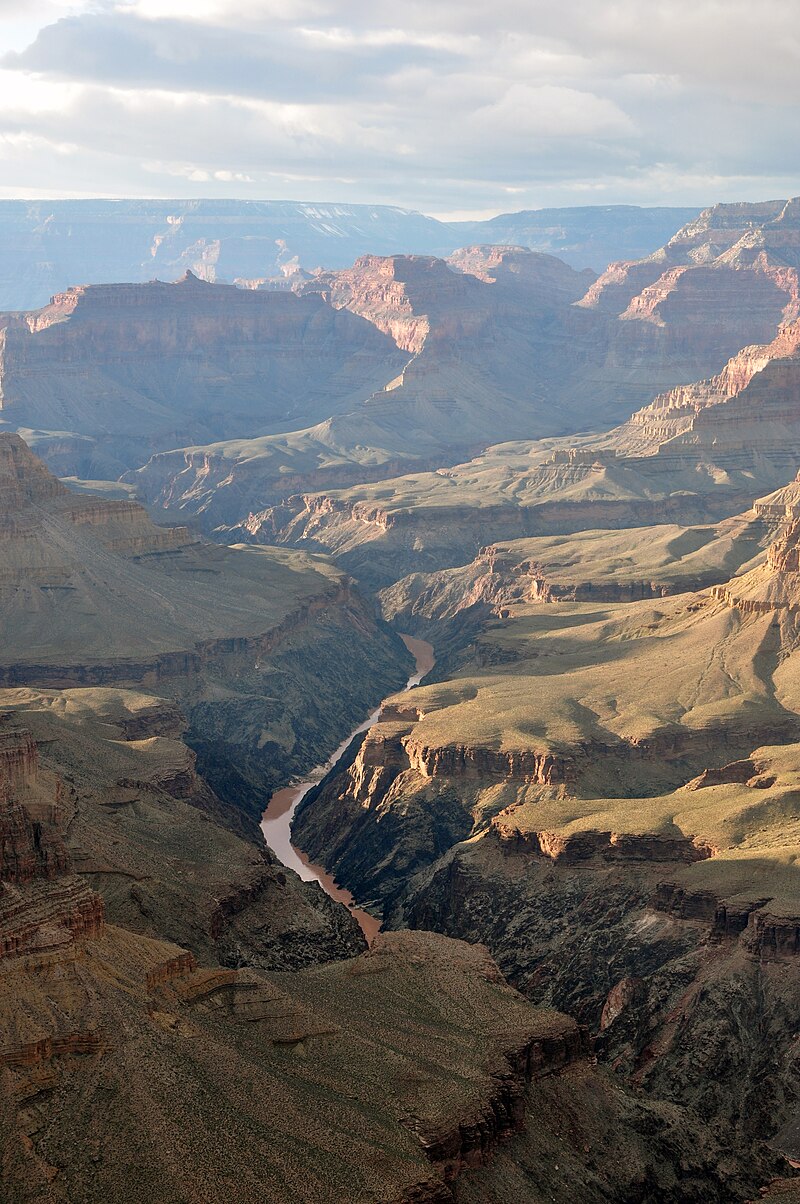
Video: The 17-Million Year Old Grand Canyon is Still Teaching Us New Things

In this video, we join 17-year old Katie Winkelman as she takes part in a youth group that is exploring the Grand Canyon on foot and by raft. While in the Canyon, she learns a lot more about how it was formed and its continued importance in the lives of more than 40 million people who depend upon the Colorado River – which carved the dramatic landscapes there – for fresh water. The health of this place, and the waters that pass through it, are incredibly important, which is why we must continue to strive to protect it.

Rabu, 31 Agustus 2016

Nat Geo Gives Us 20 National Park Leaders Under the Age of 30

As most everyone knows by now, last week the National Park Service celebrated its 100th anniversary. In the days since then, we've seen a lot of celebrations across the country, with thousands of people saluting the government agency tasked with protecting the parks while at the same time making them accessible to the public.

The celebration will continue throughout the rest of the year, but it is also a time to begin looking forward to the next century. There is still a lot of work to be done to ensure that the national parks will be around for future generations to enjoy as well. To that end, National Geographic has selected 20 scientists, filmmakers, activists, and educators who have dedicated their lives to protecting the parks, both in the U.S. and abroad. Oh yeah, and each of these men and women happen to be under the age of 30 as well.

Amongst those making the list are Ben Masters, a filmmaker and horseman who is working to protect wild mustangs. He's joined by Cassi Knight, an NPS scientist who is searching for dinosaur remains in Denali National Park, and Elizabeth and Cole Donelson who spent the past 12 months visiting all 59 U.S. national parks. Others include Jen Guyton, a scientists helping to protect animals from poachers in Mozambique, and cartographers Ross Donahue and Marty Schnure, who are mapping remote areas of Patagonia.

As you can see, this is a diverse and interesting group of individuals, each of which is playing a vital role to help promote national parks both at home in the U.S. and in other countries around the world. The concept of creating public lands that are set aside for future generations to enjoy too has been called "America's Best Idea," and these young men and women are helping to spread that idea further. Hopefully in another hundred years we'll be continuing to celebrate the National Park Service, and the effort that these individuals have made along the way.

Selasa, 23 Agustus 2016

Is the Grand Canyon in Jeopardy?

Yesterday I posted a beautiful video of the Grand Canyon in celebration of the 100th anniversary of the National Park Service later this week. Everyone knows that the national park is one of the most iconic outdoor destinations in the entire world, with some of the most amazing opportunities for adventure. But are we losing the Grand Canyon to commercial and industrial development? That is the question posed in a new article from National Geographic that reveals an uncertain future for one of the U.S.'s most famous landscapes.

In order to explore the threats to the Grand Canyon, journalists Kevin Fedarko and Pete McBride have spent the better part of the past year exploring its wonders. Starting last fall, the two men have trekked for more than 650 miles (1046 km) through remote wilderness to not only get to understand the Canyon better, but to discover how its fragile ecosystem has increasingly become under siege by outside interests.

Along the way, they talked with people living in and around the park as the two men learned about the potential for over development and the increased stress put on the Grand Canyon due to a larger number of tourists visiting. But most importantly, they discovered that mining operations just outside the park's borders could have a long-lasting, and incredibly devastating, impact on the park itself, creating a potentially dangerous environmental catastrophe. For example, uranium is one of the substances that is mined near the park that could have severe impact on its future. In fact, U.S. Geological Survey data says that 15 springs and five wells near the Grand Canyon already have levels of uranium that are considered unsafe to drink. This is mostly due to incidents from older mines in the area, but it underscores the problem none the less.

While the story is already quite eye-opening, Fedarko and McBride aren't quite done yet. They're continuing to explore the Grand Canyon even now, with plans to wrap up their investigative expedition sometime in October. The story is of course still unfolding, but the hope is that we're not too late in spreading the word about the threats to this incredibly popular national park. After all, it is a place that has been presumably preserved for future generations to enjoy as well, so why would we want to spoil it now? Hopefully that won't happen.