Tampilkan postingan dengan label Wildlife. Tampilkan semua postingan
Tampilkan postingan dengan label Wildlife. Tampilkan semua postingan
Rabu, 05 Oktober 2016
Video: Nat Geo Tells Us Why it is so Hard to Catch Poachers
As the world's population of elephants and rhinos wanes dramatically, many countries across the globe have stepped up their efforts to combat poaching in Africa and elsewhere. This is a battle that has been raging for sometime however, and yet we continue to hear how poaching is having a dramatic impact on the number of these creatures that roam the wild. Why is it so hard to stop these illegal activities? In this video from National Geographic Live, Naftali Honig – founder of the EAGLE Network – tells us why it is so hard to bring these people to justice.

Senin, 19 September 2016
Video: Meet the World's First All-Female Anti-Poaching Team
The Balule Nature Reserve in South Africa a team of women called the Black Mambas has been training for the past three years to combat illegal poaching in the region. They are the first all-female squad to take on such a mission, with their main goal being to protect the wild elephants that roam the area. In this video, brought to us by National Geographic, we join the Mambas as they go out on patrol, searching for the hunters who are looking to kill the animals in the preserve where they work. The short film is an inspiring look at this team of dedicated and tough women who are looking to make a difference with Africa's wildlife. It is really an interesting story.
Jumat, 16 September 2016
Are You the 2016 National Geographic Nature Photographer of the Year?

The contest website says "We’re looking for photos that showcase the awe-inspiring and diverse natural world around us. That could be a powerful wildlife shot, a stunning landscape, or a look at a complicated environmental issue—whatever nature means to you." In other words, there is a pretty broad interoperation out there of what exactly Nat Geo means by "nature." I'm sure more than a few have you have captured some great images over the past 12 months that you can submit to the contest. Entries are begin accepted until November 4, after which a panel of judges will decide which photos are worthy of making the cut.
Of course, there are some great prizes for those who win the contest. Each of the categories – Landscapes, Animals, Action and Environmental – will have three winners. First place will be awarded $2500 in case, while second place will get $750 and a signed National Geographic book. The third place winner goes home with $500. But best of all, the Grand Prize finisher will receive a 10-day trip for two to the Galapagos Islands courtesy of Natural Habitat Adventures. I can't think of a better place to take more photos of nature than that destination.
As you would expect, competition is sure to be tough in this contest, but you just might have the wining photo sitting on your hard drive right now. Pick out your best and submit them for consideration. Who knows, you just might be on your way to the Galapagos in the near future.
Kamis, 15 September 2016
Video: The Last Rhinos - Would Legalizing the Sale of Their Horns Save Them?
Here's an intriguing video to say the least. It follows the efforts of John Hume, a man living in South Africa who happens to own five percent of the world's rhino population. Hume sued the government in South Africa to legalize the sale of rhino horns, arguing that if you sold them on the open market, it would bring the number of rhinos killed by illegal poachers down dramatically. It seems that when removed safely and properly, the horns will grow back, and the animal won't be killed. Could this be the answer to saving Earth's engendered rhino species?
National Geographic - The Last Rhinos from Brian Dawson on Vimeo.
Rabu, 14 September 2016
Polar Bears Trap Russian Research Team Inside Arctic Base
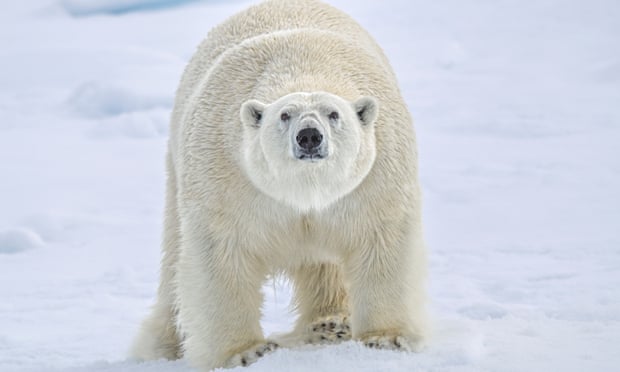
Normally, in order to keep the bears at bay, the scientists use flares and have dogs at the base to scare off the animals. But, the team had run out of flares, and according to Mashable the bears even killed one of the dogs. Because of this aggressive nature, the researchers have had to abandon some of their projects, and had been instructed to only leave the base when absolutely necessary.
It was originally reported that it would take weeks to deliver new flares and dogs to the station, but apparently relief came earlier today when a passing research vessel made a detour to lend a hand. The ship resupplied the team with flares, which were used immediately to scare off the bears. The next resupply ship wasn't scheduled to arrive for another month, but this should help buy the team some time.
Apparently, the bears gather near the base to wait for the Arctic Ocean to freeze. That typically occurs in late October or early November, at which time they'll depart the area and head north. Considering the current state of the arctic sea ice, it may take longer than usual before the bears begin their migration, and it is possible that they'll return to that location again in the days ahead.
In the past only about 4-6 bears have spent their summers on Troynoy, but apparently this year there are at least 10, including some large female with small cubs as well. One of the females has even been spending her nights just below one of the windows of the weather station, making it even more difficult for the team to sneak outside to record readings for their research.
Hopefully there will be some relief for these scientists soon. While watching polar bears up close sounds like an amazing experience, being locked inside and unable to go out doesn't seem like a lot of fun.
Rabu, 07 September 2016
Video: Drones Capture Close Encounter with Whales
It is tough to top last week's video in which a curious whale approached a passing boat, providing some spectacular footage of a humpback that was very up close and personal. But, this clip will come very close as it was shot in the South Pacific near the islands of New Caledonia. Using a drone, the crew of this ship were able to capture not only the incredibly deep blue ocean waters found there, but also several whales that once again wandered up to their boat. It is a truly amazing scene to behold and one that I think you'll find as enchanting as I did.
Kamis, 01 September 2016
Video: Curious Humpback Whale Gets Close to Boat
Having spotted whales in the wild on a couple of occasions, I can tell you that it is a magnificent sight to see them up close. But, I've never seen them as close as they are in this video, in which a very curious humpback swims up to a boat to get a better look. The result is a clip that is about as close you can get to a massive whale without getting into the water yourself. Amazing stuff.
Comprehensive Elephant Census in Africa Brings Sobering News

The study was conducted by an organization called the Great Elephant Census, which is backed by Microsoft co-founder Paul Alan's Vulcan organization. Using a method of arial data collection and surveillance, researchers have come to the stunning conclusion that there are now only 352,271 elephants left on the African continent. That population is spread out over 18 countries and is estimated to be down 30% in just 7 years. That's the equivalent of 144,000 elephants lost between 2007 and 2014.
According to the findings, the current elephant population loss is about 8% per year, with roughly 100 animals killed each and every day. Most of that is due to illegal poaching as the demand for ivory remains high in certain parts of the world, including Asia and even the United States. Measures have been taken recently to stem the sale of Ivory across the globe, but a thriving black market remains.
The 352,000 elephants counted in the census are believed to be at least 93% of the population that still exists in the 18 countries surveyed. That number could be higher, but it is difficult to track them completely precisely. Of those counted as part of this research study, 84% lived on protected lands, with the remaining population spotted outside preserves and national parks where they don't receive any kind of protection at all. That said, many carcasses were found inside those protected regions as poachers ignore laws and cross boundaries to seek their prey.
As you can imagine, with such a massive drop in numbers over the past decade, the possible extinction of the wild elephants in Africa is a real possibility within our lifetimes. Having seen these magnificent creatures up close and personal both on foot and from a vehicle, I can't imagine them not being a part of the wild landscape on that continent. But, if poaching continues at its current rate, they may be completely gone in as little as 20 years. When you consider that at one point, there were more than 20 million elephants in Africa, you begin to get some perspective about just how decimated the population is there.
Sad news for conservationists for sure. Lets hope we can turn this trend around in the near future.
Senin, 29 Agustus 2016
Video: Clever Seal Avoids Death by Jumping into Boat
What's a desperate seal to do when being hunted by orcas? Why jump into a passing boat to avoid certain death of course! That's exactly what happens in this video, which was shot by an amateur filmmaker (witness the use of vertical video) who caught a pod of orcas hunting a seal who ultimately decides his best course of action is to leave the water altogether and hitch a ride on their boat. Warning: some of the language in the clip is a bit salty, but it is still amazing to watch nonetheless.
Rabu, 10 Agustus 2016
Video: Squirrel Grabs GoPro, Makes Own POV Movie
What happens when a squirrel grabs your GoPro camera and runs with it up into the trees? You get a squirrel's eye view of what it is like to hop along on branches high above the ground of course! That is exactly what happened in this video, with the little rodent picking up the camera and setting off on his merry way. The entire time the video is recording, giving us a unique perspective that we wouldn't normally see. Fortunately the squirrel was kind enough to give the camera back to the footage could be uploaded to YouTube. Check it out below.
Langganan:
Postingan (Atom)