Tampilkan postingan dengan label Sailing. Tampilkan semua postingan

Senin, 03 Oktober 2016

Roald Amundsen's Ship Recovered From the Arctic Ocean

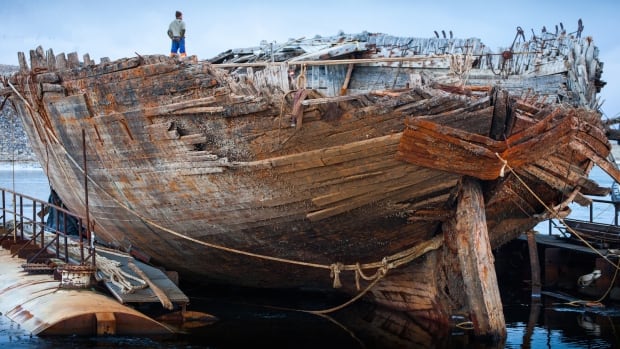
After resting at the bottom of the ocean for more then 85 years, Roald Amundsen's ship the Maud has been brought back to the surface, and is preparing to return to Norway. The ship, which was discovered off the coast of Cambridge Bay in Canada, helped to chart the Northeast Passage from 1918-1920, sunk in those waters back in 1930 after a short, but distinguished career in exploration.

A recovery team has spent the past six years working to bring the ship up from its watery grave. This past July, their efforts finally paid off, as the ship returned to the surface for the first time in more than eight decades. The crew first had to place a series of inflatable ballasts around the hull of the vessel, then slowly add air to them. Eventually this allowed them to place it on a barge and float it into harbor. Over the past two months, they have been been cleaning up the interior of the vessel in preparation for weathering the winter in the Arctic.

The recovery team says that the winter weather will actually help the ship, allowing its wooden hull to dry. This will help to reduce the ship's current weight, and will take some of the pressure off of the hull. That will help to stabilize it for the long journey back home to Norway, which is likely to take place next summer.

According to reports, the ship is in surprisingly good shape. The hull remains solid and strong, despite being at the bottom of the ocean for so long. The vessel was originally built back in 1917, and commissioned by Amundsen to accompany him on his exploration of the icy waters north of Russia. Amundsen is well know for is exploits in the cold places of our planet. He was the first person to reach the South Pole back in 1911, and was instrumental in exploring the Arctic as well, becoming the first person to full pass through the Northwest Passage.

The Maud was sold off in 1925, five years before she sank. But, she is considered an important piece of exploration history, and back home in Norway she'll be preserved for posterity. In that country, Amundsen is incredibly famous, and any relic left over from his expeditions is a valuable commodity.

This is quite a cool story. I'm glad this team was able to locate and recover the ship. Hopefully it makes it through the winter in one piece, and returns home next year as planned.

Kamis, 15 September 2016

168 Years After Sinking in the Arctic the HMS Terror has Been Found

After years of searching in the Arctic, the missing ship of explorer Sir John Franklin has been found at long last. Earlier this week it was announced that the HMS Terror, a vessel that Franklin was using to explore the icy waters of the Northwest Passage, had been found after 168 years.

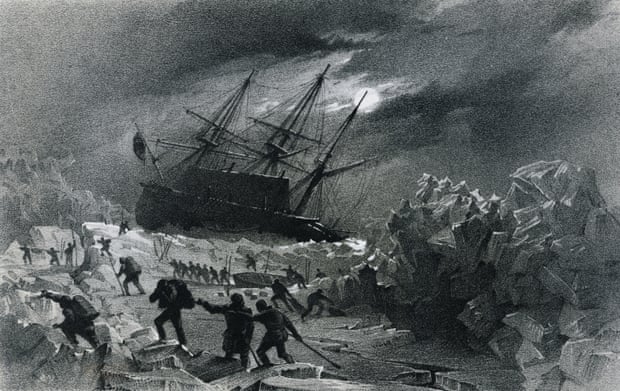
Franklin and his crew had been exploring the Arctic Ocean north of Canada back in 1848 when they ran into thick pack ice that prevented them from continuing their voyage. Both the Terror and its sister-ship, the HMS Erebus became trapped, forcing everyone onboard to abandon the two vessels. Eventually, all 129 members of the crew perished in the Arctic, and what became of the ships remained a mystery.

A few years back the Erebus was discovered by a search crew, but the location of the Terror remained a mystery. Now, thanks to a tip from a local Inuit tribesman, that mystery has been solved. The Terror  was found in – of all places – Terror Bay, where its mast was spotted sticking out of the ice by passing hunters a few years back. That tip led to an archeological team going to the site to check out the area, only to discover the very vessel they had been searching for.

According to early reports, it seems that the ship is in relatively good condition, and may contain most of the things that were left onboard when it was abandoned by Franklin and his crew. In comparison, the Erebus has suffered hull damage, and Arctic currents had spread out its contents over a wide area. It'll be some time before salvage crews can truly get a look at the Terror however, so just what might be on the ship remains a mystery.

As for Franklin and his men, it seems that after they abandoned their ships, they began a long and perilous march across the Arctic with the hopes of reaching the Hudson Bay Company – a fur trading outpost far to the south. None of the men made it to the safety of that place however, vanishing in desolate white expanse of the north. Inuit oral histories talk about the foreigners passing through their area, but their ultimate fate has never been fully told.

The disaster that beset the Franklin crew is one of the worst in British naval history. It was quite a blow to that country, which ruled the seas and was pushing the boundaries of exploration at the time. Now, after more than a century and a half, at least part of the mystery has been solved.

Arctic Explorers Bring Bad News After Sailing Northwest and Northeast Passages

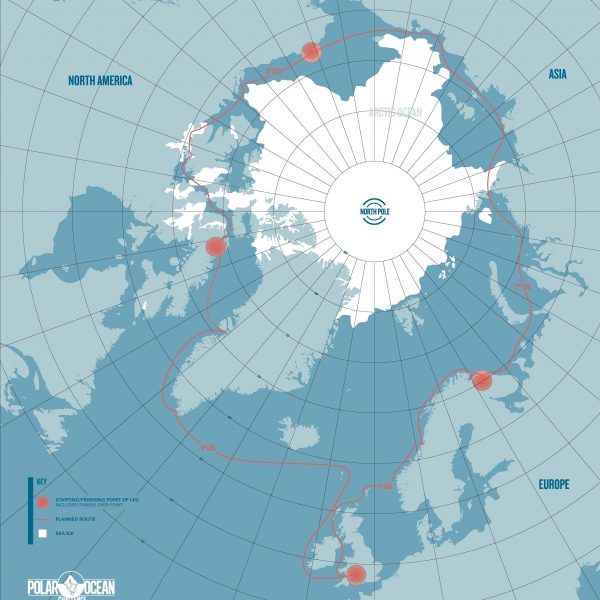
One of the most ambitious and interesting adventures of the summer has been the Polar Ocean Challenge. Led by famed explorer David Hempleman-Adams, the objective of the expedition was to sail both the Northeast and Northwest passages in a single year, circumnavigating the North Pole and taking stock of the arctic sea ice along the way. A few days back the crew of adventurers, sailors, and researchers completed a major milestone of their journey, and they brought back some sobering news about the state of ice in the Arctic Ocean.

The sailing ship Northabout set sail from Bristol, in the U.K. back June, making way for Norway before proceeding on to Russia to the start of the Northeast Passage. The ship ran into a delay at that point due to pack ice still blocking the route. That isn't too uncommon in the early part of summer, as it generally takes a few weeks before the passage clears. From there, they navigated on through the icy waters of the Arctic before exiting into the Northern Pacific and crossing over to Alaska. The next stage of the journey was through the Northwest Passage above Canada, which is the section that was just completed. Now, the plan is to sail on to Greenland, and then back home to Bristol.

By successfully navigating through the both the Northwest and Northeast passages, the crew proved that those once mythical routes are now fully open, and accessible. They also became the first ship to make such a journey in a single season, although they certainly won't be the last. Climatologists now predict that both passages will see increasing numbers of commercial traffic before the middle of the century, even by ships that are not hardened against ice.


On the Polar Ocean Challenge website the team posted a press release a few days back sharing the news of their successful completion of the Northwest Passage, which took just 14 days to finish. That's an incredibly fast time through that part of the world, but the team revealed that they had encountered almost no ice along the entire route. In fact, in the two weeks that they spent there, they came across ice only twice in 1800 nautical miles (3333 km/2071 miles).

This news is both astonishing and troubling at the same time. It now seems pretty clear that both the Northwest and Northeast Passages will soon be open for longer periods of time each year, and that they will be safer than ever to pass through. The Arctic sea ice is a bit like the canary in the coal mine, giving us an indicator of just how much impact climate change is having on our planet.

The crew of the Northabout is on the home stretch now, having completed the most difficult sections of their voyage. The team's website shares some important information about their expedition, which has now been at sea for more than 20 weeks and covered over 13,500 nautical miles (24,076 km /14,960 miles). Perhaps the most startling statistic of all however, is that researchers about the ship have recorded a 13.4% drop in the sea ice levels, which is a faster and higher rate than was expected.

I suspect these kinds of reports will become the norm moving forward. It is still troubling to read however.